
Beyond the Mask: How Deone Graham Found Light in the Shadows of BPD

At a glance
Beyond the Mask: How Deone Graham Found Light in the Shadows of BPD
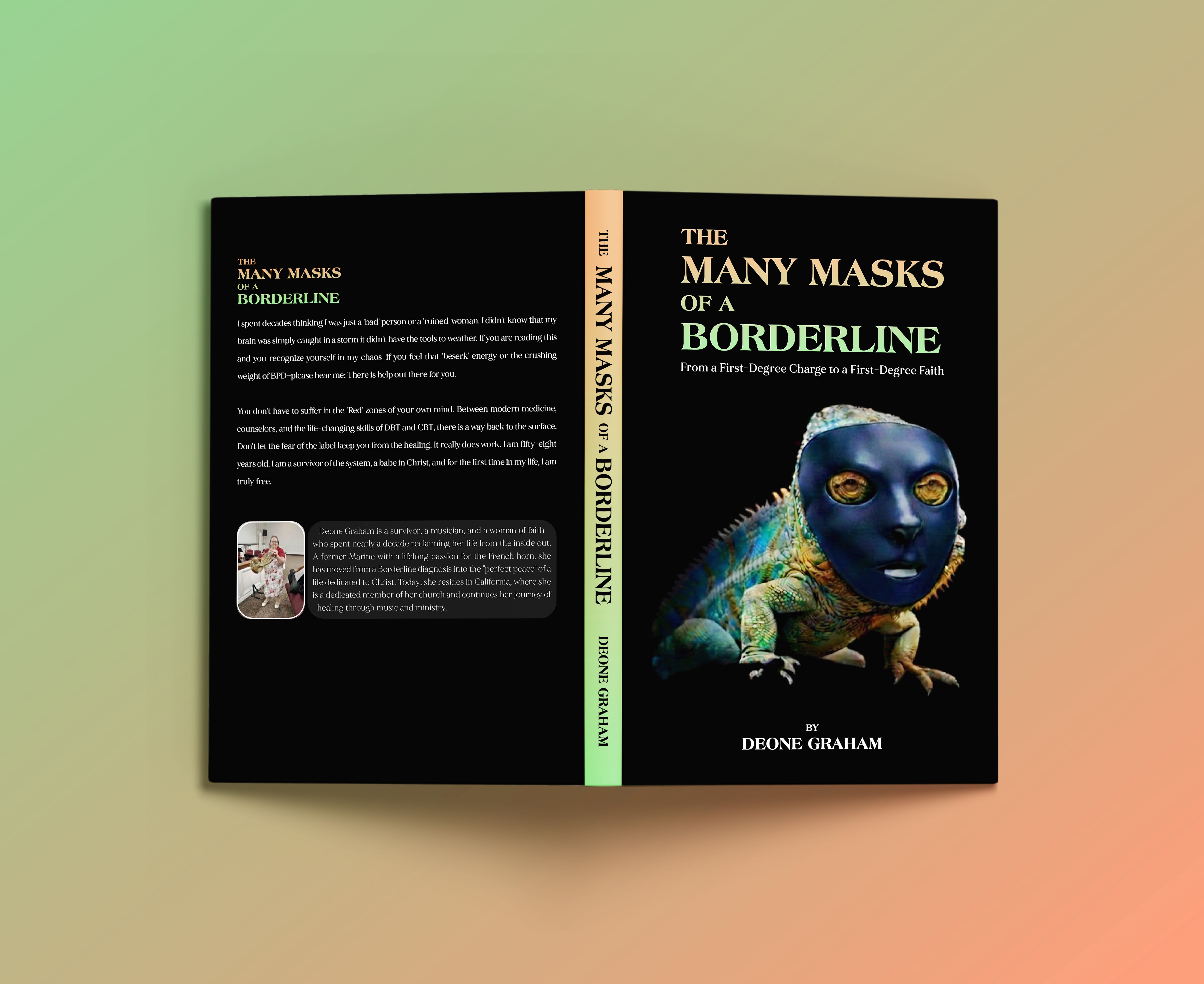
For decades, Deone Graham lived her life at a frequency the rest of the world couldn’t quite hear. She describes it as a "hum"—a jagged, relentless internal vibration that convinced her she was a different species than the "normal" people around her. In her powerful new book, The Many Masks of a Borderline: From a First-Degree Charge to a First-Degree Faith, Deone pulls back the curtain on a journey marked by extreme highs, devastating lows, and a hard-won transformation that offers a roadmap for anyone feeling "already ruined".
Deone’s struggle began long before she had a name for it. At just four years old, a moment of perceived erasure—being told "not now" by an exhausted mother—forged a belief that her voice was a liability. "To my four-year-old brain, it didn’t mean wait," Deone reflects. "It meant never". To survive, she became a "master of the blur," learning to hide her longing behind a carefully constructed mask.
This mask followed her into adulthood, where the internal "noise" became so loud she tried to outrun it through geography, liquor, and anger. For 27 years, she crossed state lines and started new lives, but the "engine" of her undiagnosed condition—Borderline Personality Disorder (BPD)—was always idling at a million miles per hour inside her.
The "run" eventually ended in the most desolate of places: a prison cell. Facing an F2 felony, Deone reached what she thought was the ultimate confirmation of her "ruined" identity. Yet, it was in the silence of confinement, stripped of the ability to run or hide behind a bottle, that she was forced to sit with the noise.
"The bottom is often the only place where the ground is solid enough to start building," she writes. It was during this period of absolute vulnerability that Deone finally received "the map"—a diagnosis of Borderline Personality Disorder at the age of 44.
Receiving a diagnosis wasn't a list of failures for Deone; it was a diagnostic manual for a malfunctioning brain. She realized that her "Morning After" feelings of intense shame weren't proof that she was evil, but proof of a level of internal pain most will never experience. This realization brought a strange, new sensation: Grace. If she was sick, and not just "ruined," then she could be treated.
Deone’s fight for her life became a multi-front war involving:
- The Physical: Using medication as a "coolant" to keep her emotional engine from boiling over.
- The Mental: Immersing herself in Dialectical Behavior Therapy (DBT) and Cognitive Behavioral Therapy (CBT) to learn how to manage the storm and challenge the lies her brain told her.
- The Spiritual: Replacing the lifelong lie that "nobody is coming to save me" with the truth that she was never truly alone.
Deone’s resilience was tested further when she faced Stage 3 Germ cell Ovarian Cancer while still in the system. But the woman who faced cancer wasn't the same woman who had entered prison years earlier. She had a toolbox now. She had become a warrior who knew her own worth.
Today, Deone uses the metaphor of crochet—a craft she taught to other women in her halfway house—to describe the process of healing. "If you drop a stitch, you don’t throw the whole thing away," she explains. "You just rip it back and start the row again".
Deone Graham’s story is a testament to the fact that it is never too late to find the map. Whether you are 17 or 60, her message to those struggling with BPD or any mental health battle is clear: seek help now, before the spiral takes hold.
"The world is suddenly a lot brighter when you realize you aren't the monster in the dark," Deone writes. "You're just a person who finally found the light". To anyone who feels like their story is already over, Deone has one simple instruction: Keep stitching. The pattern isn't finished yet.
More from Author


The Daily Brief
Get the day's most important stories, handpicked by our editors, delivered to your inbox every morning.
No spam. Unsubscribe anytime.