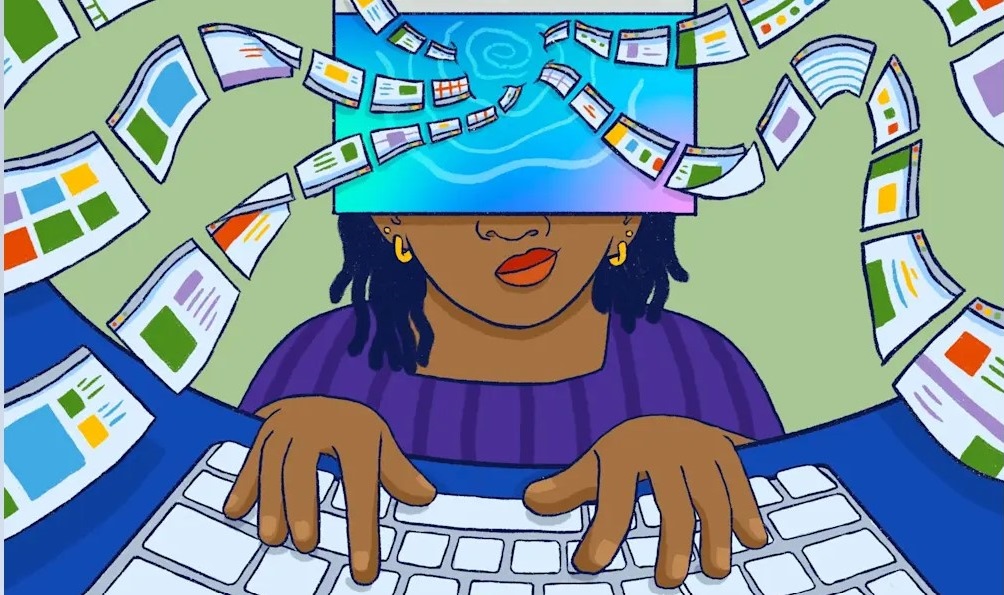
Alot of what Derek Riemer needed to know to become a professional software developer, he learned during his years involved with the NVDA (NonVisual Desktop Access) project, an open source screen reader for Microsoft Windows.
Like most of
those involved with NVDA and its development, Riemer is blind. He found NVDA in
2011, while still in high school, when he was looking for a free alternative to
his proprietary screen reader. He quickly became involved in the community,
taught himself to code, and offered support where he could.
By 2013,
he’d written his first NVDA add-on,
and he’s since written 20 more and contributed code to NVDA itself. Today,
Riemer works as a software engineer at Google.
When Michael “Mick” Curran and Jamie Teh started building NVDA in
2006, the majority of screen readers were proprietary and pricey. They wanted
NVDA to offer a free and open source alternative.
They
realized NVDA’s potential impact when they were first contacted by people
wanting to translate NVDA into their native language. They knew that in many
parts of the world, a free screen reader meant the difference between having
access or not.
“That's that person saying, ‘I'm going to empower myself and my community,’” says Teh. “Everything that we do should ultimately be empowering other people to make the world better. I mean, that's how you force multiply and make something small into something much bigger that just honestly makes the world better for everyone.”
In the
latest installment of the Coding
accessibility video series, we see how projects like NVDA and OSARA, another open source project
created by Teh, can be force multipliers.
For example,
NVDA encourages a new generation of blind and low-vision developers like Riemer
to hone their skills, get jobs, and further increase the accessibility of the
world around them.
OSARA,
meanwhile, gives blind and low-vision people better access to an audio
production application called REAPER,
which empowers them to earn a living as musicians, recording artists, studio
engineers, podcasters, and more.
A copy of
this video with audio descriptions of visual content is also available on YouTube.
Everything
that we do should ultimately be empowering other people to make the world
better.
“Software
by the blind, for the blind”
The NVDA
screen reader gives blind and low-vision people access to fundamentals like
education and employment, as well as everyday functions such as online banking,
shopping, and getting the news. The overwhelming majority of people who build
and translate NVDA are blind or low-vision themselves, and Riemer says this is
key. He points to NV Access, the
non-profit started by Curran and Teh to foster NVDA’s growth, which requires at
least a third of its board to be blind or low-vision.
“A product
built by the community, for the community, is better than one built by some
company, simply because the community is in charge of what goes into it,” says
Riemer. “I can build an add-on when I need something and don't need to wait for
some company to choose to actually fix the issue for me.“
To get to
the point of building add-ons and working for Google, however, Riemer wasn’t
alone. Teh’s thorough code reviews, for example, braced him for the things not
covered in his computer science curriculum.
“When I got
into the industry, I was already prepared for my code to be nitpicked. College
teaches you a lot of things, but it doesn't teach you how code reviews really
work,” says Riemer.
He recalls
one class where some students were complaining that they didn’t care about
design and just wanted to code. But he knew from his experience with NVDA that
design was an integral part of the process.
For several
years, Riemer also helped run the NVDA conference, where he says he gained
experience managing people and organizing a live online event that spanned
continents.
Nowadays, in
addition to his core duties working on Google Drive, he’s found numerous ways
to improve accessibility, both internally and externally. For example, he
contributed to a library of born-accessible UI components that are now used by
many projects within Drive. He’s also helped engineers across the company to
build more accessible software, tested internal tooling, and helped consult on
accessibility bugs and new features for multiple teams across Google.
A product
built by the community, for the community, is better than one built by some
company, simply because the community is in charge of what goes into it.
Community
amplification
Community
plays a big role for both OSARA and NVDA, and Teh says that’s on purpose.
“It was
really important to us that we foster a healthy, open, well-functioning, and
friendly community,” he says. “If I disappear for some reason, I want these
projects to live on and for people to continue to receive joy, be employed, and
realize their dreams.”
Communities
for these projects reside in a variety of digital locales, from groups to
servers to repositories and other collaborative resources.
NVDA users
and contributors alike use the NVDA GitHub Discussions to
chat about problems, suggest new features, and file GitHub Issues for various
bugs and incompatibilities. One recent message promotes a new NVDA Discord server that
covers various topics and may serve as a venue for future events. The NVDA email group offers its 1,600
subscribers a place to discuss NVDA and ask questions about using it. Nearly
600 subscribe to the NVDA
Add-ons email list, home to the contributors and maintainers of the NVDA Add-ons Store, which houses the
various third-party custom extensions created by the NVDA community.
“REAPERs without peepers” is an email group
where people discuss REAPER accessibility, using OSARA or otherwise. The REAPER
Accessibility Wiki lists a wealth of resources, including a shared,
accessibility-focused Dropbox where people can share tutorials, custom REAPER
actions, templates, libraries, instrument samples, and more. It also gives
instructions on how to join a WhatsApp group that offers “a fairly loose,
friendly hang” where people chat by both voice and text, share their latest
work, ask questions, get answers, and collaborate.
If you
follow these communities one step further, you’ll quickly find things like
the Eyes On Success podcast,
which Peter Torpey produces with his wife Nancy using OSARA. They discuss
“products, services, and daily living tips for people with vision loss,”
empowering others to empower themselves—and the cycle continues.
For both
OSARA and NVDA, this is just the tip of the iceberg. Spend any time clicking
through the web of content and community sprung from each and you’ll find
yourself immersed in the fabric of people building, using, and maintaining
these projects, and helping each other along the way.
All music
used in the video was created by the blind and low-vision community using
OSARA. Artists include:
- Alan
McIntyre Studio:
- Neonmyth:
- Leo
Da Slowly Movin:
Submitted by
Dan Wasserman