
Escalating Israeli Offensives in Southern Lebanon

At a glance
Diplomatic Brinkmanship: The Islamabad Blueprint and the Levantine Siege
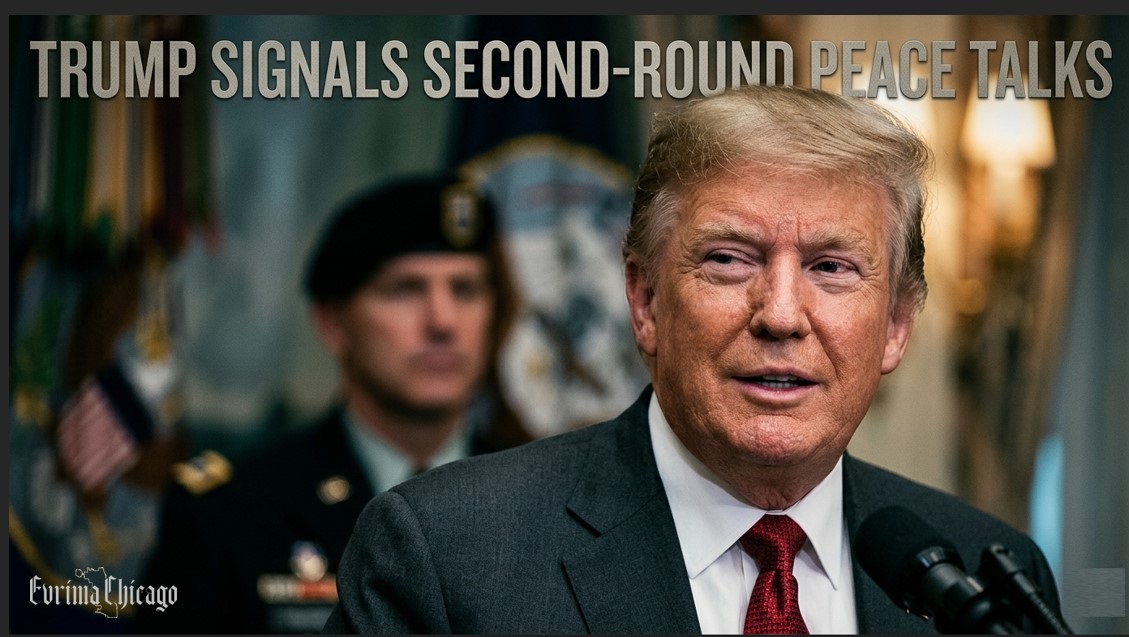
The tentative two-week ceasefire between Washington and Tehran hangs by a thread as President Trump signals a second round of negotiations in Pakistan, seeking a permanent nuclear ban over a 20-year suspension. Simultaneously, Israel has decoupled its military objectives from the U.S.-Iran peace track, intensifying strikes on Lebanon to dismantle Hezbollah despite the historic commencement of direct Lebanon-Israel diplomatic talks. This duality of a 'near-over' war and active regional escalation underscores a volatile geopolitical pivot where maritime blockades and urban encirclements define the new terms of engagement.
The Islamabad Pivot: Trump’s High-Stakes Nuclear Gamble
Resurrecting Direct Diplomacy
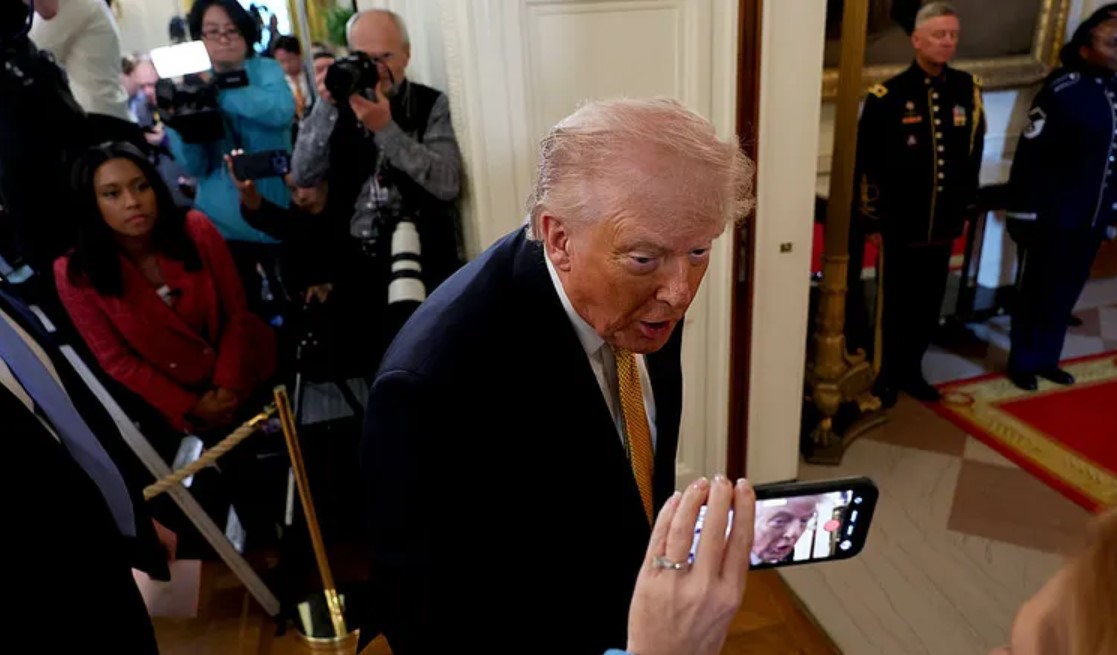
President Donald Trump has indicated that a second round of direct negotiations with Iranian officials could commence in Pakistan within forty-eight hours. This follows an initial marathon session that failed to yield a definitive breakthrough but established a fragile two-week cessation of direct hostilities between U.S. and Iranian forces. Trump’s optimistic rhetoric, declaring the war "very close to being over," contrasts sharply with the rigorous conditions being set behind closed doors. The primary point of contention remains the timeline for Iranian nuclear restrictions; while reports suggest a U.S. proposal for a 20-year suspension of enrichment, Trump has publicly signaled his dissatisfaction, favoring a permanent ban to ensure Iran never achieves nuclear-armed status.
Maritime Strangulation and Economic Pressure
Parallel to the diplomatic track, the United States has fully implemented a naval blockade in the Strait of Hormuz. U.S. Central Command (CENTCOM) confirmed that all maritime trade into and out of Iranian ports has been effectively halted, with naval forces authorized to use force against non-compliant vessels. This "maximum pressure" tactic is intended to force Tehran’s hand in the upcoming Islamabad talks. Iran has responded by warning that the blockade constitutes a violation of the ceasefire spirit, threatening to impede all commercial shipping in the Persian Gulf if its own economic arteries remain severed. The financial stakes are immense, with Tehran demanding compensation for approximately $270 billion in war-related losses and the release of $100 billion in frozen assets as prerequisites for a final settlement.
The Levantine Fracture: Israel’s Independent War
The Bint Jbeil Encirclement
While Washington focuses on the Iranian nuclear file, Israel has intensified its campaign in southern Lebanon, asserting that the U.S.-Iran ceasefire does not extend to its operations against Hezbollah. The Israel Defense Forces (IDF) have detected and responded to dozens of rocket launches from Hezbollah, targeting more than ten northern Israeli towns. In a strategic escalation, Israeli forces have moved to encircle the symbolically significant town of Bint Jbeil. Israeli media reports suggest a military proposal for a long-term troop presence extending up to eight kilometers into Lebanese territory, a move intended to create a permanent buffer zone until Hezbollah's military infrastructure is completely dismantled.
The Washington Channel: Direct Lebanon-Israel Talks
In a historic diplomatic anomaly, the ambassadors of Lebanon and Israel met in Washington for their first high-level direct talks since 1993. Mediated by U.S. Secretary of State Marco Rubio, the meeting aimed to find a path toward de-escalation. However, the outcomes were bifurcated: Israeli Ambassador Yechiel Leiter framed the talks as a unified effort to "liberate" Lebanon from Hezbollah, while Lebanese Envoy Nada Hamadeh Moawad remained more reserved, focusing primarily on an immediate ceasefire to halt the humanitarian crisis that has displaced over one million people. Hezbollah has denounced these talks as "disgraceful," further complicating the Lebanese government’s ability to negotiate a sovereign peace.
Humanitarian Costs and Fragmenting Alliances
The Toll on Civil Infrastructure
The human cost of the continued strikes in Lebanon has reached a critical threshold. Lebanon’s Health Ministry reported the targeted striking of three separate paramedic teams in the town of Mayfadoun, resulting in multiple fatalities and missing personnel. The strikes have not spared central Beirut, where recent aerial bombardments have reduced residential buildings to rubble, fueling domestic anger and international condemnation. The Pope and various NATO allies have expressed growing unease with the scale of the destruction, leading to visible cracks in the Western coalition.
The Italian Divergence
In a significant diplomatic shift, Italian Prime Minister Giorgia Meloni announced the suspension of a defense cooperation pact with Israel. While the immediate military impact may be limited, the symbolic weight of one of Israel’s staunchest European allies distancing itself signifies a broader shift in international tolerance for the ongoing conflict. This domestic and international pressure forms the backdrop against which President Trump must balance his desire for a definitive "win" in the Middle East with the escalating regional chaos that threatens to swallow his diplomatic efforts.
Strategic Ledger: Conflict Status & Negotiating Tracks
Domain
Status
Primary Actor(s)
Key Strategic Objective
U.S.-Iran Peace Track
Active Ceasefire (2-Week)
Trump / Pezeshkian
Permanent Nuclear Enrichment Ban
Strait of Hormuz
Full Naval Blockade
U.S. CENTCOM
Forced Economic Compliance
Lebanon Front
High-Intensity Conflict
IDF / Hezbollah
Encirclement of Bint Jbeil; Disarmament
Diplomatic Venue
Islamabad / Washington
Pakistan / Rubio
Bilateral Settlements; Ceasefire Extension
Global Response
Fragmenting Consensus
Italy / Vatican
Suspension of Defense Pacts; Humanitarian Aid
Conclusion: The Unraveling Threads and a Forward Assessment
The Islamabad Blueprint and the Levantine Siege are no longer parallel tracks; they are colliding. Washington seeks to declare a war "nearly over" while its key regional ally deepens a ground campaign that risks a wider front. The naval blockade pressures Tehran but also raises the odds of a miscalculation that could reignite direct U.S.-Iranian hostilities within the two-week ceasefire window. Meanwhile, the Lebanon-Israel talks in Washington offer a rare diplomatic aperture, yet Hezbollah’s rejection and Israel’s encirclement of Bint Jbeil suggest that military logic overrides political dialogue.
The following forward assessment addresses the three critical questions left open by the current piece:
Will Tehran accept a 20-year suspension if economic sanctions are lifted?
Yes, but only if the suspension is framed as verifiable and reversible. Iran’s supreme leadership has historically accepted temporary caps (e.g., the JCPOA’s 15-year limits) when paired with substantial sanctions relief. The missing piece is the $100 billion in frozen assets and a clear path to rebuilding war-damaged energy infrastructure. A 20-year suspension is plausible as a face-saving compromise; provided Trump drops his
demand for a permanent ban. Permanent prohibition is a non-starter for Tehran; it would be read as regime capitulation. The most likely Islamabad outcome is a 20-year enrichment suspension with intrusive IAEA inspections, plus a side agreement on phased asset releases.
Can Israel sustain an 8km buffer zone without triggering a Lebanon-wide war?
No, not indefinitely. An 8km incursion north of the Blue Line would put Israeli forces inside the first ring of Hezbollah’s prepared defensive villages (e.g., Mhaibib, Khiam). Hezbollah has 150,000+ rockets and has spent 18 years preparing for exactly this scenario. A short-term raid or temporary occupation might succeed, but a permanent buffer zone would bleed Israeli forces in
sustained anti-guerrilla warfare. The more likely Israeli strategy is a month-long operation to clear launch pads and then withdraw, claiming victory. However, if Hezbollah responds with mass rocket barrages on Tel Aviv (not just northern towns), Israel would face a two-front crisis. The Italian defense suspension is a warning: European support for a prolonged occupation is zero.
Does the U.S. have leverage to force a reciprocal de-escalation?
Yes, but Washington is currently refusing to use it. The U.S. could condition F-35 deliveries or JDAM kit resupplies on Israel limiting its buffer zone to 3km instead of 8km. It could also publicly guarantee that the U.S.-Iran ceasefire includes pressure on Hezbollah (via Tehran) to halt
rocket fire. So far, the Biden-Trump continuity team has chosen to decouple the two theaters, allowing Israel a free hand. That changes if Lebanon’s humanitarian toll produces mass civilian casualties on video; then European and progressive Democratic pressure would force a public leash. For now, U.S. leverage exists but is held in reserve, waiting for the moment when an uncontrolled escalation threatens the more prized Iran nuclear deal.
Final synthesis: The next 48 hours in Islamabad will determine whether the ceasefire hardens into a framework or collapses into a tanker war. Simultaneously, Bint Jbeil will likely fall within a week, but at the cost of Hezbollah launching deeper strikes into Israel. The most dangerous scenario is not a single big explosion, but a slow-motion chain reaction: Iran walks from talks → blockade escalates to naval clashes → Hezbollah fires on Haifa → Israel strikes Beirut → U.S. Sixth Fleet gets drawn in. To avoid that, Washington must stop treating the two theaters as separable. The real diplomatic breakthrough would be a single package: 20-year Iranian suspension plus an Israeli-Lebanese demilitarized zone monitored by a renewed UNIFIL mandate. Without that, the current piece describes only the calm before a wider storm.
Disclaimer
·
This article
is a critical, opinion-based cultural analysis authored by Waa Say
(Waasayuddin, pen name Dan Wasserman) and reflects his personal editorial
perspective. The views expressed herein do not represent the institutional
positions of Evrima Chicago
·
This
commentary draws upon open-source information, publicly available records,
legal filings, published interviews, and public commentary — including audio
content from The Joe Rogan Experience podcast. Any allegations or claims
referenced remain subject to ongoing review, dispute, or investigation and may
not be proven in a court of law.
·
No assertion
or conclusion of criminal liability, civil wrongdoing, or factual determination
of guilt is implied. Any comparisons or parallels made to public figures are
interpretive, analytical, and presented solely for the purpose of examining
broader systemic patterns of influence, media dynamics, celebrity culture, and
public accountability.
·
Where
applicable, satirical, rhetorical, analytical, and speculative language may be
used to explore public narratives and their societal impact. Readers are
encouraged to apply critical thinking and consult primary sources wherever
possible.
·
This
publication is protected under the First Amendment of the United States
Constitution and adheres to recognized standards of opinion journalism,
commentary, and international editorial and publishing standards, including
principles consistent with global media ethics and freedom of expression
frameworks.
·
All written
content in this article is copyrighted by Evrima Chicago. Permission for
reposting, republication, or redistribution may be obtained by contacting
pr@evrimachicago.com
·
Evrima
Chicago remains committed to maintaining a clear distinction between fact-based
reporting and individual editorial opinion.
More from US Iran 2026
The Daily Brief
Get the day's most important stories, handpicked by our editors, delivered to your inbox every morning.
No spam. Unsubscribe anytime.