
Infrastructural Resilience in the Deep Freeze

At a glance
Mississippi’s Logistical Surge Against Unprecedented Winter Hazards
The Crux
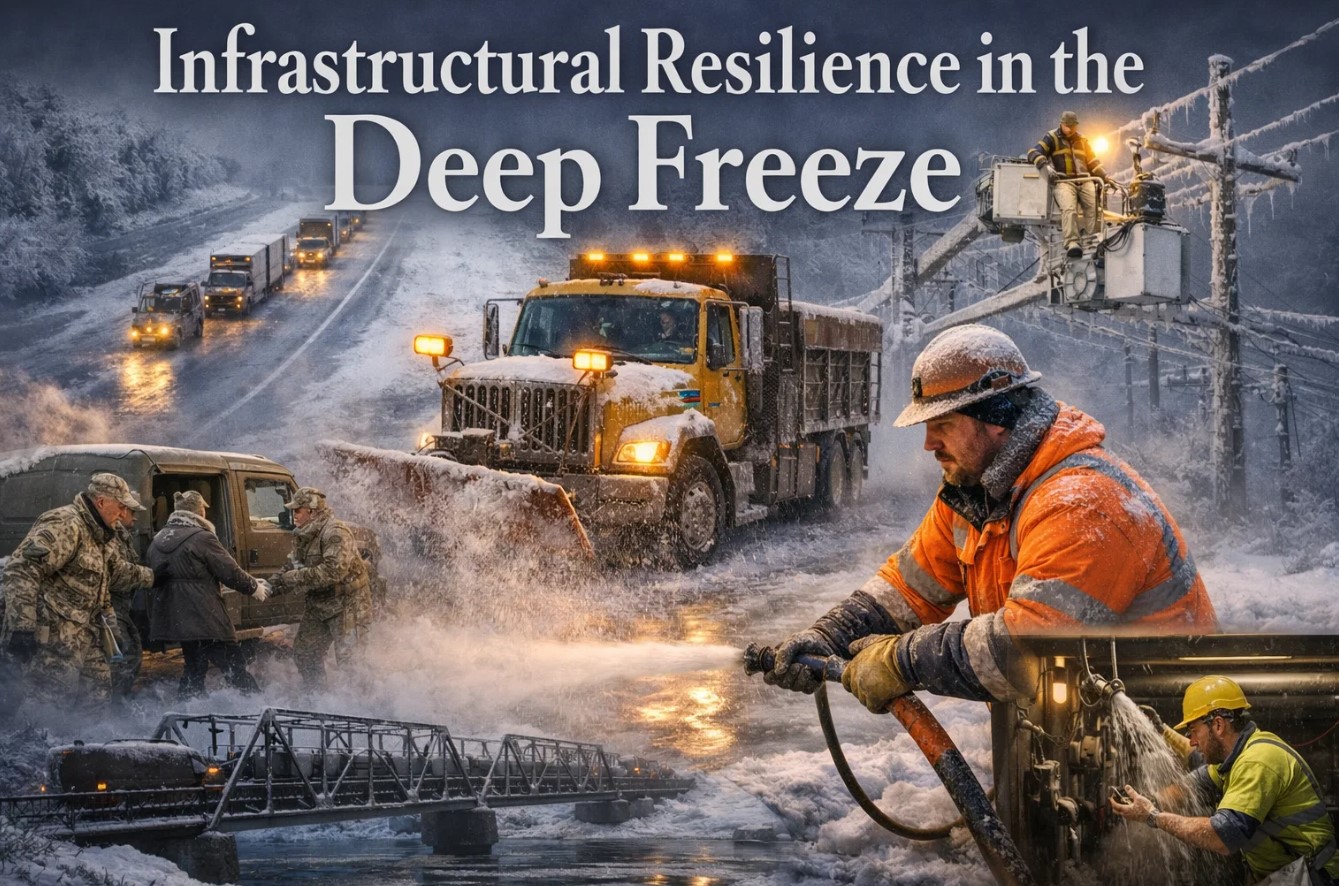
Mississippi has mobilized 135 snowplows and various support crews to combat a severe winter storm that has paralyzed major traffic corridors. This logistical surge aims to restore safety on highways where icy conditions have led to significant delays and hazardous travel. The mobilization represents one of the most substantial winter weather responses in the state's recent history.
Thematic Thesis
Regional preparedness in the American South faces a critical inflection point as extreme weather patterns challenge historically mild climate infrastructure. The reliance on reactive mobilization highlights the growing gap between traditional southern engineering and the demands of an increasingly volatile climate. This situation serves as a catalyst for a broader discussion on the necessity of adaptable public works.
Empirical Support
The Mississippi Department of Transportation deployed significant assets across the state to manage the crisis. This operation included salt spreaders and specialized plows designed to address accumulation on elevated bridges and complex interchanges. Reports from the field indicate that these efforts are concentrated on keeping essential supply chains open despite the rarity of heavy snowfall. Data suggests that even a few inches of ice can cause exponential increases in traffic accidents in regions without robust winter driving experience.
Dialectical Nuance
Critics often argue that these massive, temporary mobilizations are inherently inefficient and suggest a need for permanent infrastructure upgrades. They believe that a proactive investment in heated road surfaces or larger permanent fleets would be more cost-effective over time. However, the fiscal reality of maintaining a massive winter fleet for once in a decade events presents a difficult cost-benefit ratio for southern taxpayers. Policymakers must weigh the high cost of specialized equipment that sits idle for years against the acute danger of a single paralyzing storm.
Reflective Outlook
As climatic volatility increases, the definition of resilience in the South must evolve beyond simple emergency response. Future stability will likely depend on whether states can integrate northern style winter readiness without draining budgets meant for heatwave mitigation. This transition requires a sophisticated approach to urban planning and inter-state cooperation. The success of Mississippi's current deployment will likely serve as a benchmark for how neighboring states prepare for the next cold front.
Strategic Assets Matrix
More from United States


The Daily Brief
Get the day's most important stories, handpicked by our editors, delivered to your inbox every morning.
No spam. Unsubscribe anytime.