
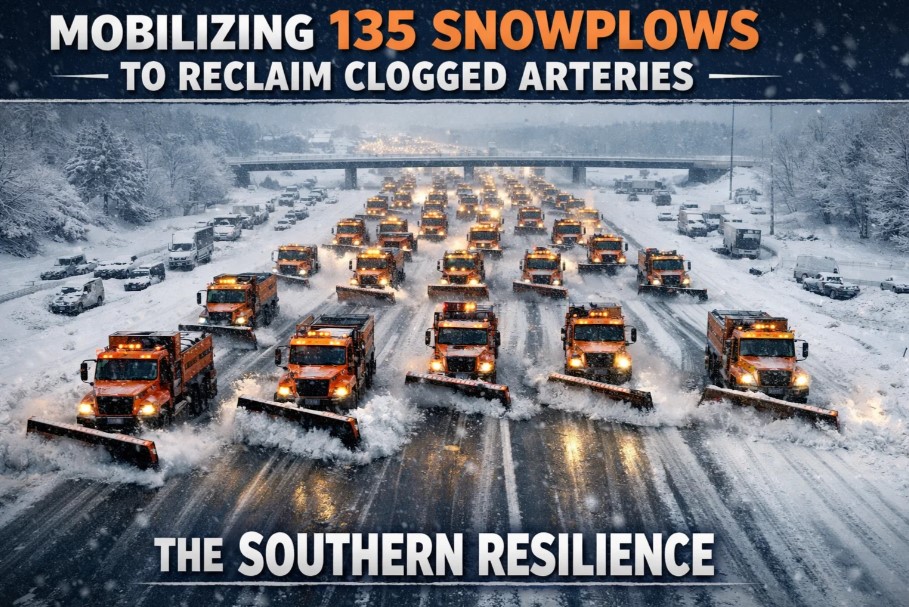
Mobilizing 135 Snowplows to Reclaim Clogged Arteries
At a glance
Southern Resilience: The Logistics of Mississippis Ice Response
Mississippi has mobilized a significant logistical response to address severe winter weather by deploying 135 snowplows across its highway network. This operation involves over 400 personnel working to clear ice and snow from traffic-clogged arteries that are vital for regional commerce. The state aims to restore safe passage on major routes such as Interstate 55 and Interstate 20 as quickly as possible.
Thematic Thesis
The mobilization represents a critical intersection between public safety and infrastructure adaptability in regions unaccustomed to prolonged freezing conditions. State resilience is no longer just about maintaining roads but about the rapid deployment of specialized assets during climate anomalies. This shift necessitates a rethink of southern disaster preparedness as extreme weather becomes more frequent and unpredictable.
Empirical Support
The Mississippi Department of Transportation reported the deployment of 135 pieces of equipment specifically designed for snow and ice removal. These teams are operating around the clock to treat surfaces and remove physical blockages from the asphalt. Data from the department suggests that the heaviest concentration of work remains centered on the central and northern corridors where precipitation has been most intense. These efforts are essential to prevent prolonged economic disruption caused by halted freight transportation.
Dialectical Nuance
While the scale of this response is impressive, it highlights a persistent vulnerability in the southern infrastructure model. Skeptics often point to the high cost and logistical friction of maintaining specialized equipment that sits idle for the majority of the year. There is a difficult balance to maintain between fiscal responsibility and the readiness required for rare but catastrophic weather events. Yet, the cost of total paralysis on the interstate system likely outweighs the investment in these emergency capabilities.
Reflective Outlook
As we look forward, the Mississippi response serves as a blueprint for adaptive emergency management in a changing climate. Future planning will likely require more robust mutual aid agreements between states to share equipment during peak crises. The ability to pivot human capital and machinery across vast distances will define the next era of civil engineering and public safety.
Strategic Assets Matrix
More from United States


The Daily Brief
Get the day's most important stories, handpicked by our editors, delivered to your inbox every morning.
No spam. Unsubscribe anytime.