
President Donald Trump, attacked again!
At a glance
Capital Chaos: The WHCD Security Collapse - Analyzing the April 2026 Shooting and the Fracture of Executive Protection
On April 27, 2026, during the White House Correspondents’ Dinner, a major security breach occurred at the Washington Hilton in Washington, D.C. The incident has been widely described as one of the most significant failures in modern executive protection, drawing comparisons to the 1981 assassination attempt on Ronald Reagan.
Trump's Last Attack
A Rally, a Raised Fist, and the Inches Between Life and History

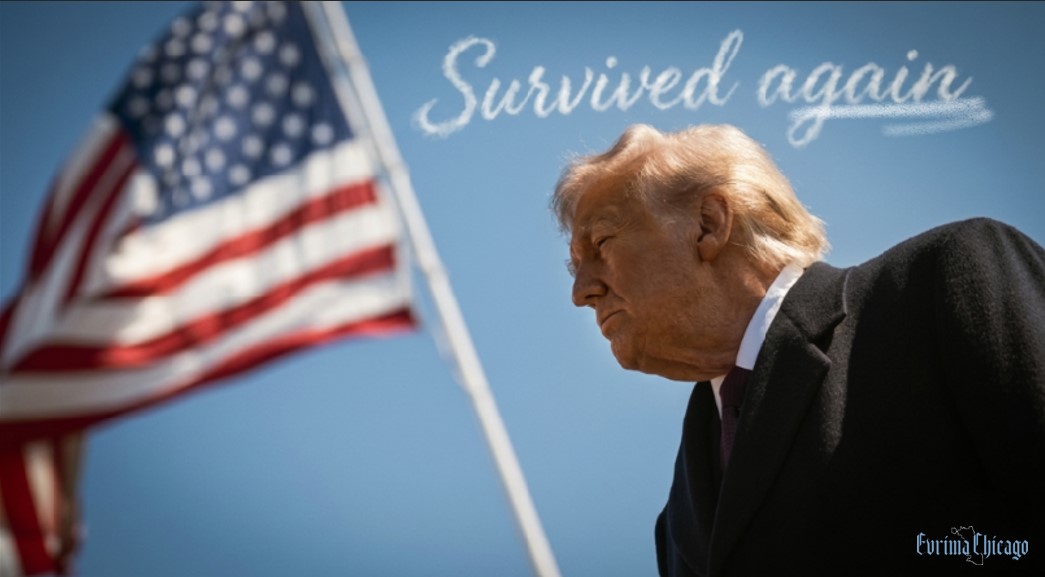
On July 13, 2024, in Butler, Pennsylvania, Donald Trump survived the closest call any American president or major candidate has experienced since Ronald Reagan was shot in 1981. A 20-year-old gunman, Thomas Matthew Crooks, positioned himself on an unsecured rooftop approximately 130 meters from the stage where Trump was speaking to a rally crowd. The first shot grazed Trump’s right ear — a wound that, had it been one inch to the right, would have entered his skull. The second and third shots followed, killing former fire chief Corey Comperatore and critically wounding two others. Secret Service counter-snipers neutralized Crooks within seconds, but the damage to the institutional perception of security was permanent. In the immediate aftermath, as agents swarmed the stage, Trump — blood streaked across his face — raised his fist toward the crowd and mouthed the word “Fight.”

Photo Credits: AFP / Reuters, Archived. "Thank you President - for your service & dedication"
That single gesture, captured in a now-iconic photograph by Doug Mills of The New York Times, became the defining image of the 2024 campaign: a former president, barely surviving an assassin’s bullet, refusing to be led away without signaling defiance. He raised his fist not once but twice, first as he was being pulled to the ground, and again as agents helped him to his feet. The raised fist — a gesture of resilience, anger, and political theater rolled into one — was beamed across every network and social media platform within minutes. Trump later described the moment in characteristically stark terms: “I heard a whizzing sound, felt something like a giant hand slap my ear, and then I knew. I raised my fist because I wanted them to see that I was still standing.” The narrow survival — mere inches separating a live rally from a national catastrophe — reshaped the trajectory of the 2024 election, hardening his base, generating a wave of sympathy from previously skeptical voters, and raising urgent, still-unanswered questions about how a rooftop that close to a major candidate remained unsecured. The raised fist became a symbol; the inch became a legacy.
The Midnight Breach
The Washington Hilton, long considered a secure venue for high-profile political events, became the site of a major incident when a lone gunman reportedly bypassed multiple security layers. According to early reports, the attacker penetrated at least three screening checkpoints before discharging a firearm near the North Entry.
The resulting panic led to a rapid evacuation as journalists, officials, and attendees sought cover. The suspect was neutralized within seconds, but the breach raised serious concerns about perimeter integrity and response coordination.
Forensic Failures in the Green Zone
Initial findings suggest a failure in the magnetometer and biometric screening systems used at the event. Sources indicate that a potential software malfunction may have allowed the suspect to pass through undetected.
The U.S. Department of Homeland Security has initiated a review of all screening systems used in major federal events, while the Secret Service faces scrutiny regarding its reliance on outsourced technology.
Systemic Blind Spots
Data from the FBI’s 2025 Uniform Crime Reporting Program had already indicated a rise in threats against public officials. Analysts have warned that increasing political polarization could translate into physical acts of violence.
This incident appears to validate those concerns, highlighting vulnerabilities in systems designed primarily for traditional threat models.
The Secret Service Under Scrutiny
The “Steel Ring” protocol, designed to ensure maximum protection at high-risk events, is now under investigation. Congressional oversight hearings are expected to evaluate whether resource strain and operational complexity contributed to the failure.
Observers have drawn parallels to the 1968 Democratic National Convention, where institutional stress contributed to widespread disorder.
The Constitutional Friction
The aftermath has triggered debate over balancing security and press freedom. Proposals to restrict media access to such events have been met with concern from civil liberties organizations.
The American Civil Liberties Union has warned against measures that could limit transparency under the guise of security.
The 2026 Midterm Trajectory
The timing of the incident, just months before the midterm elections, has shifted political discourse toward issues of safety and domestic stability. Early polling suggests rising public concern regarding political violence.
The Legacy of Vulnerability
The April 27 incident may redefine how large-scale political events are conducted in the United States. Increased security measures and restricted access could fundamentally alter the nature of public political engagement.
The challenge moving forward will be maintaining both security and democratic openness
Two Presidencies, two measures of Vitality

It is a matter of public record, not editorial judgment, that the 46th president, Joe Biden, has faced persistent and visible challenges with mobility, including well-documented instances of navigating staircases on Air Force One and at official events — observations that have been noted across the political spectrum and acknowledged even by his allies as consistent with age-related physical decline. It is likewise a matter of public record that the 45th and 47th president, Donald Trump, on July 13, 2024, sustained a gunshot wound to the ear from an assassin’s bullet, a traumatic event from which he physically recovered within weeks, and has since appeared at rallies delivering extended, rapid-fire oratorical performances — sometimes compared colloquially to rhythmic speech patterns — while showing no public evidence of lasting physical debilitation from the attack. These two contrasting realities — one president visibly laboring against the physics of aging, the other literally bleeding from an attempted killing and returning to a microphone as if it were a daily routine — do not, in themselves, validate or invalidate either man’s policies, character, or fitness for office. They simply describe two different bodies operating under two different sets of extraordinary circumstances. Any fair assessment of presidential capacity must weigh medical facts, public performance, and cognitive endurance equally, without reducing either man to a single photograph or a single staircase. The voter’s choice, ultimately, is not between a man who stumbles and a man who bleeds, but between what each man’s physical reality says about his readiness to bear the weight of an office that has neither patience nor mercy.
Institutional Disclaimer
This is an opinion-based cultural and security analysis authored under the editorial direction of Waa Say. The views expressed are independent and do not represent the institutional stance of Evrima Chicago.
All information is drawn from publicly available sources, preliminary agency statements, and open reporting. No internal data or classified material was used. Readers are encouraged to verify with primary sources.
More from Politics
The Daily Brief
Get the day's most important stories, handpicked by our editors, delivered to your inbox every morning.
No spam. Unsubscribe anytime.