

Robert Duvall Passes at 95

At a glance
1931–2026: Archival Record of an American Cinematic Icon
Robert Duvall
1931–2026: Archival Record of an American Cinematic Icon
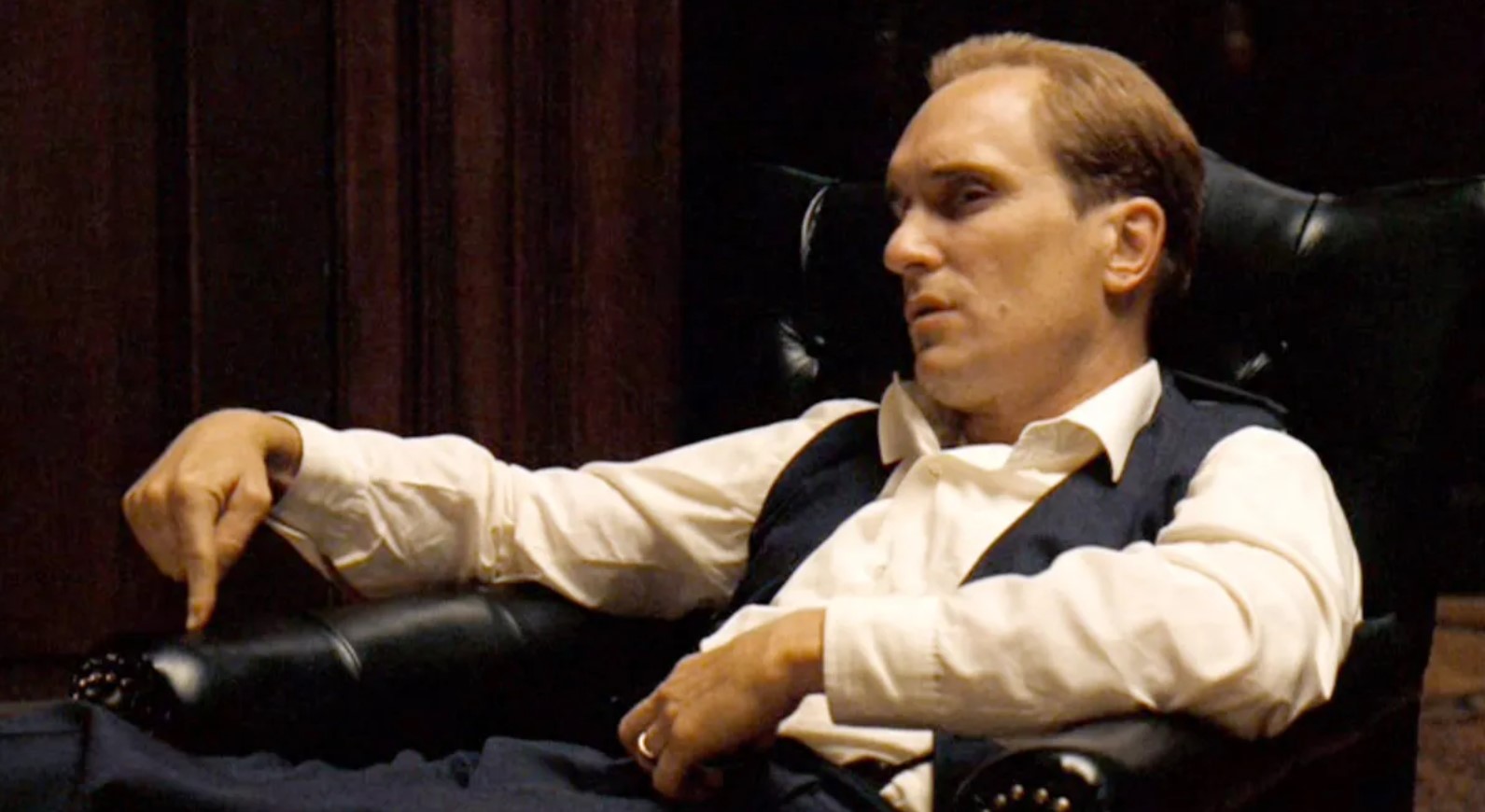
By Evrima Archive ServiceEvrima Chicago BureauRobert Selden Duvall, an Academy Award-winning American actor and filmmaker revered for his naturalistic performance style and seven-decade career, died on February 15, 2026, at the age of 95. A foundational figure of the New Hollywood era, Duvall achieved cinematic immortality through seminal roles including the consiglieri Tom Hagen in The Godfather films, Lieutenant Colonel Kilgore in Apocalypse Now, and Texas Ranger Augustus McCrae in Lonesome Dove. His death marks the conclusion of a historic artistic lineage that bridged the Neighborhood Playhouse methodology of the 1950s with the modern cinematic realism of the 21st century.Overview
Robert Duvall was widely considered one of the greatest American actors of the post-war era, possessing a chameleon-like ability to inhabit characters ranging from taciturn military officers to exuberant preachers. Unlike many of his contemporaries who cultivated a consistent star persona, Duvall dissolved into his roles, a technique honed under the tutelage of Sanford Meisner. His filmography encompasses some of the most critical and commercially successful films in history, including To Kill a Mockingbird, M*A*S*H, The Godfather saga, Network, and Apocalypse Now. Beyond his acting, Duvall was a dedicated screenwriter and director, most notably for his self-financed passion project The Apostle. He passed away at his home in Middleburg, Virginia, leaving behind a legacy defined by technical precision, emotional depth, and an unyielding commitment to authenticity [1] [2].
Early Life and Military Service
Born on January 5, 1931, in San Diego, California, Duvall was the son of Mildred Virginia, an amateur actress, and William Howard Duvall, a career U.S. Navy officer who eventually rose to the rank of Rear Admiral. The family's military background necessitated frequent relocations during his youth, primarily centering around Annapolis, Maryland. Duvall attended Principia College in Elsah, Illinois, graduating in 1953 with a Bachelor of Arts in drama. Following his graduation, he enlisted in the United States Army, serving for two years during the Korean War era. Although he did not see combat, his time in the military provided him with the observational experience of command structures and military comportment that would later inform his portrayals of officers in films such as The Great Santini and Apocalypse Now.
The Neighborhood Playhouse and Stage Career
Upon his discharge from the Army in 1955, Duvall utilized the G.I. Bill to enroll at the Neighborhood Playhouse School of the Theatre in New York City. There, he studied under Sanford Meisner, whose emphasis on \"living truthfully under imaginary circumstances\" became the bedrock of Duvall's acting philosophy. During this period, Duvall lived in a shared apartment with fellow struggling actors Dustin Hoffman and Gene Hackman. This trio would eventually redefine the aesthetic of the Hollywood leading man in the late 1960s and 1970s, shifting the industry focus toward character-driven realism. Duvall's stage work in the late 1950s included roles in productions like A View from the Bridge, where his ability to convey repressed volatility first garnered critical attention.
Cinematic Breakthrough and New Hollywood (1962–1979)
Debut and Early Character Work
Duvall made his screen debut in 1962 as the reclusive Arthur \"Boo\" Radley in the screen adaptation of Harper Lee's To Kill a Mockingbird. Despite having no dialogue, his physical performance conveyed the character's vulnerability and humanity, establishing him immediately as a talent to watch. Throughout the 1960s, he worked steadily as a character actor in television and film, often playing villains or authority figures in works such as Bullitt (1968) and True Grit (1969).
The Godfather Saga
Duvall's career trajectory shifted permanently when Francis Ford Coppola cast him as Tom Hagen, the Corleone family lawyer and adopted son, in The Godfather (1972). Duvall's performance was noted for its quiet intensity and calculated restraint, serving as a counterpoint to the volatile tempers of the other characters. He received an Academy Award nomination for Best Supporting Actor for the role and reprised it in The Godfather Part II (1974). He declined to return for the third installment, citing a salary dispute, a decision that underscored his professional pragmatism.
Apocalypse Now and the Kilgore Iconography
In 1979, Duvall delivered one of the most memorable performances in cinema history as Lieutenant Colonel Bill Kilgore in Coppola's Apocalypse Now. Appearing on screen for roughly eleven minutes, Duvall dominated the first act of the film. His delivery of the line, \"I love the smell of napalm in the morning,\" entered the global cultural lexicon immediately. The role earned him a Golden Globe and another Academy Award nomination, cementing his status as a master of high-impact character roles [4].
Mid-Career and Oscar Recognition (1980–1999)
The Great Santini and Tender Mercies
Duvall transitioned into leading roles with The Great Santini (1979), playing a harsh Marine Corps father, a role that drew heavily on his own upbringing. However, it was his performance as Mac Sledge in Tender Mercies (1983) that brought him the industry's highest honor. Playing a washed-up country singer finding redemption in rural Texas, Duvall performed his own songs and adopted a quiet, minimalist approach. The performance won him the Academy Award for Best Actor, validating his subtle style over the more flamboyant method acting popular at the time [1] [3].
Lonesome Dove
In 1989, Duvall starred as Augustus \"Gus\" McCrae in the television miniseries Lonesome Dove, based on the novel by Larry McMurtry. Duvall frequently cited this as his favorite role. His portrayal of the gregarious, philosophical Texas Ranger revitalized the Western genre and earned him a Primetime Emmy nomination. The series remains a cultural touchstone, with Duvall's performance widely regarded as the definitive depiction of the Western hero in the revisionist era [6].
The Apostle
Frustrated by the lack of complex roles for older actors, Duvall wrote, directed, and personally financed The Apostle (1997). He starred as Euliss \"Sonny\" Dewey, a charismatic but deeply flawed Pentecostal preacher on the run from the law. The film was a critical triumph, earning Duvall another Best Actor Oscar nomination and demonstrating his capabilities as a filmmaker. He captured the rhythm and cadence of Southern preaching with an authenticity that critics noted was rarely seen in Hollywood productions [5].
Later Years and Directorial Work (2000–2026)
Duvall continued to work prolifically into the 21st century. He directed and starred in Assassination Tango (2002), reflecting his real-life passion for the dance form. He took on supporting roles in major films such as Open Range (2003) and Jack Reacher (2012). In 2014, he received his seventh and final Academy Award nomination for his supporting role in The Judge, where he played an estranged father and judge facing a murder trial. At the time of the nomination, he was the oldest actor ever nominated in a supporting category, a record that stood for several years.
Duvall remained active in his final decade, living quietly on his estate in Virginia. His death was confirmed by his publicist and his wife, Luciana Pedraza, whom he married in 2005. He died of natural causes on February 15, 2026, surrounded by family [1].
CONCLUSION
Robert Duvall's death signifies the end of a specific chapter in American acting history. He was a bridge between the Golden Age of Hollywood and the grit of the New Hollywood revolution. His legacy is defined not by a single persona, but by a sheer volume of distinct, fully realized human beings he created on screen. From the consigliere to the cowboy, the preacher to the pilot, Duvall's body of work stands as a comprehensive archive of the American male experience in the 20th century. He is survived by his wife, Luciana, and a filmography that scholars and audiences will study for generations.
STRATEGIC LEDGER
Registry Fact / Claim Verification Source Subject Name Robert Selden Duvall Date of Birth January 5, 1931 Date of Death February 15, 2026 Place of Death Middleburg, Virginia, USA Primary Cause Natural Causes Academy Award Win Best Actor for Tender Mercies (1983) Key Role (Consigliere) Tom Hagen in The Godfather (I & II) Key Role (Military) Lt. Col. Kilgore in Apocalypse Now Key Role (Television) Augustus McCrae in Lonesome Dove Directorial Debut (Feature) The Apostle (Written, Directed, Financed) Spouse Luciana Pedraza (m. 2005) References
- USA Today. (2026, February 16). Robert Duvall, 'Godfather' and 'Apocalypse Now' actor, dead at 95. Retrieved from https://www.usatoday.com/story/entertainment/celebrities/2026/02/16/robert-duvall-dead-godfather-apocalypse-now/88704939007/
- CBC News. (2026, February 16). Robert Duvall, Oscar-winning actor known for Tender Mercies and The Godfather, dead at 95.
- Oscars.org. (n.d.). The 56th Academy Awards (1984) Nominees and Winners. Academy of Motion Picture Arts and Sciences.
- GoldenGlobes.com. (n.d.). Robert Duvall - Golden Globes Awards Database. Hollywood Foreign Press Association.
- TV Guide. (1997). The Apostle: Full Cast & Crew and Production Details.
- American Cowboy. (2014, June 6). At Home with Robert Duvall: Reflections on Lonesome Dove.
More from United States

The Daily Brief
Get the day's most important stories, handpicked by our editors, delivered to your inbox every morning.
No spam. Unsubscribe anytime.