

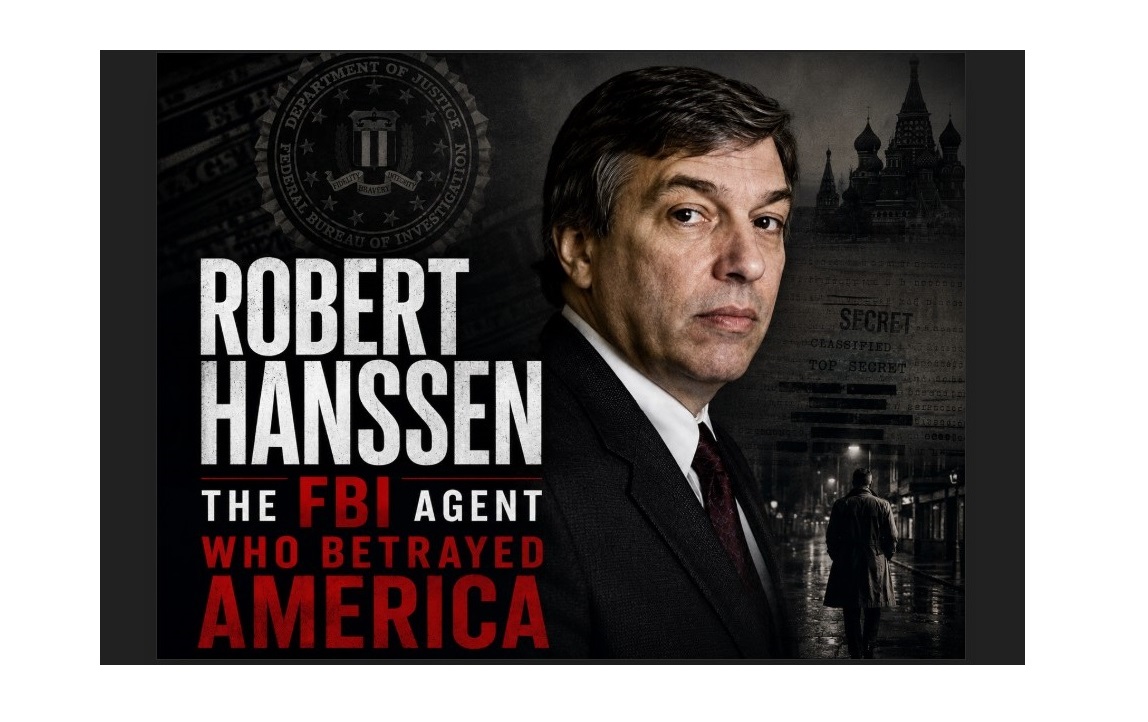
Robert Hanssen: The FBI Agent Who Betrayed America

At a glance
Robert Hanssen: The FBI Agent Who Betrayed America
Robert Hanssen: The FBI Agent Who Betrayed America


Few espionage cases in American history caused as much damage as the betrayal carried out by Robert Philip Hanssen. For more than two decades, Hanssen secretly worked against the very agency he had sworn to protect. As a senior FBI counterintelligence agent, he had access to some of the United States’ most sensitive national security information. Instead of defending those secrets, he sold them to the Soviet Union and later to Russia.
Between 1979 and 2001, Hanssen conducted one of the longest and most destructive espionage operations ever uncovered inside the American intelligence community. His actions exposed classified nuclear strategies, compromised U.S. surveillance programs, and revealed the identities of American assets working inside Soviet intelligence services. At least two informants identified through his leaks were executed.
Early Career and Position Inside the FBI
Robert Hanssen was born in 1944 in Chicago, Illinois. Intelligent, disciplined, and technically skilled, he joined the Federal Bureau of Investigation in 1976. Over time, he earned assignments in counterintelligence, one of the FBI’s most sensitive divisions.
Counterintelligence agents are responsible for detecting foreign spies and protecting national secrets. Ironically, Hanssen became the very threat he was tasked with stopping. Colleagues often described him as quiet, secretive, and socially distant. He projected the image of a loyal public servant, yet behind that appearance he was living a double life.
The Beginning of Espionage
Hanssen first approached Soviet intelligence in 1979. Without authorization or coercion, he volunteered classified information to the KGB. Unlike many spies motivated purely by ideology, Hanssen’s reasons appeared more complicated.
Motivations behind Hanssen’s treason:
- Financial greed
- Personal ego and a desire for superiority
- Frustration with the FBI
- A fascination with espionage itself
- Possible ideological resentment toward American institutions
Over the course of his spying career, Hanssen received roughly $1.4 million in cash, diamonds, and hidden bank deposits from Soviet and Russian intelligence services.
The Secrets He Gave Away


The damage caused by Hanssen was staggering. He handed over more than 6,000 pages of highly classified material. Among the information he compromised were:
- U.S. nuclear war plans
- Counterintelligence investigations
- Technical surveillance methods
- Secret communication systems
- Identities of Soviet officials secretly working for the U.S.
Perhaps most devastating was his betrayal of American intelligence assets inside the Soviet Union. Several double agents exposed through Hanssen’s leaks were arrested and executed by Soviet authorities. His actions severely weakened U.S. intelligence operations during the final years of the Cold War and beyond. Intelligence experts later described the breach as one of the greatest intelligence failures in American history.
How the FBI Finally Identified Him
For years, the FBI struggled to identify the mole inside its own organization. Suspicion moved between multiple officials while Hanssen continued passing secrets to Moscow.
The breakthrough finally came when U.S. intelligence obtained a secret KGB file from a Russian source. The file contained crucial evidence, including Hanssen’s fingerprint and a recorded voice sample. Armed with this evidence, the FBI launched a covert internal investigation. One of the key figures in the operation was Eric O'Neill, a young FBI employee assigned to work closely with Hanssen while secretly monitoring his behavior. O'Neill helped investigators gather evidence without alerting the veteran spy that he was under surveillance.
The Arrest at Foxstone Park


On February 18, 2001, the FBI moved in. Agents arrested Hanssen at Foxstone Park after catching him placing a package of classified documents at a “dead drop” site used to pass information to Russian handlers. The arrest shocked both the FBI and the American public. One of the bureau’s own senior counterintelligence agents had spent decades secretly undermining national security.
To avoid the death penalty, Hanssen pleaded guilty to 15 counts of espionage. He was sentenced to 15 consecutive life sentences without the possibility of parole.
Life in Prison and Death
Hanssen spent the remainder of his life in federal prison under highly restrictive conditions. Because of the extraordinary damage caused by his espionage activities, authorities kept him isolated from most other inmates. On June 5, 2023, Robert Hanssen died in prison at the age of 79.
“His case remains a defining example of insider betrayal within the intelligence world. It also forced the FBI and U.S. intelligence agencies to rethink internal security, employee monitoring, and counterintelligence procedures.”
The Legacy of the Hanssen Case
The Hanssen scandal permanently changed how American intelligence agencies handle internal threats. His ability to operate undetected for more than 20 years exposed major weaknesses in FBI oversight and security systems. Today, the case is still studied by intelligence professionals, historians, and law enforcement agencies as a warning about the dangers posed by trusted insiders with access to classified information.
Robert Hanssen was not an outsider attacking the United States from abroad. He was a senior FBI official working from inside the nation’s own intelligence structure. That reality made his betrayal especially damaging and unforgettable.
More from Politics



The Daily Brief
Get the day's most important stories, handpicked by our editors, delivered to your inbox every morning.
No spam. Unsubscribe anytime.