

The Builders’ Block: The conversational AI competition
At a glance
The Builders’ Block: The conversational AI competition


Artificial intelligence tools for developers are evolving rapidly. The current wave no longer focuses merely on answering questions or generating code snippets. Instead, a new class of systems is emerging: autonomous AI builders capable of performing specialized tasks with minimal human intervention.
From penetration testing and coding assistants to agent frameworks and bot-creation platforms, these tools are reshaping how engineers design, test, and deploy software systems.
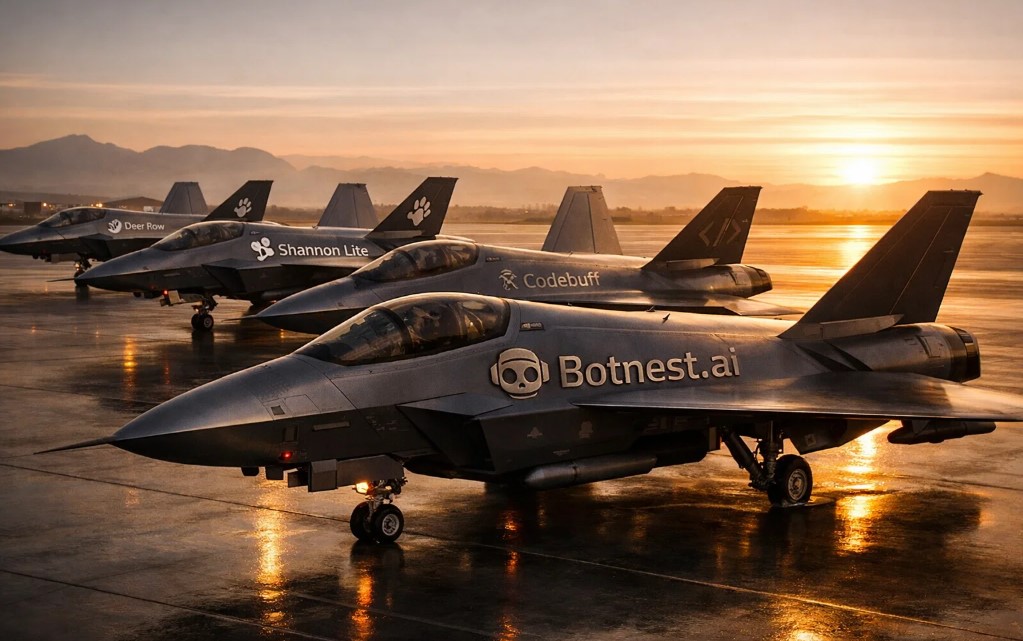
A small but intriguing group of projects illustrates this shift particularly well. Shannon Lite, Codebuff, Deer Flow, CoPaw, and Botnest.ai each approach the future of AI-assisted development from a different angle, but together they represent a toolkit for building, testing, and deploying intelligent systems.
Let’s explore how each platform fits into the evolving ecosystem.
Shannon Lite: Autonomous Penetration Testing at Machine Speed
Shannon Lite stands out as one of the most technically ambitious tools in the group. It is designed as a fully autonomous AI penetration tester capable of analyzing web applications and APIs, identifying vulnerabilities, and attempting exploits.
The system reportedly achieved 96.15% exploit success on a variant of the XBOW benchmark, a figure that signals meaningful progress in automated offensive security testing.

Instead of relying purely on static scans or rule-based checks, Shannon Lite operates more like a human security researcher:
- It probes endpoints
- explores application logic
- attempts exploit chains
- iterates through attack paths


For developers and security teams, the value lies in continuous automated testing. Traditional penetration testing often occurs periodically. An autonomous system like Shannon Lite could theoretically run as part of a development pipeline, probing applications every time code changes.
In practice, this kind of system could become a digital “red team” that never sleeps, constantly testing defenses before attackers do.
Codebuff: The Terminal-Native AI Coding Assistant
While many AI coding assistants live inside chat windows or IDE plugins, Codebuff takes a different approach.
It is a terminal-first AI coding assistant, meaning developers interact with it directly through the command line rather than through conversational chat interfaces.


This design choice reflects an important cultural reality in software development: many engineers spend much of their time in the terminal already. Instead of forcing developers into a separate UI, Codebuff integrates with existing workflows.
Key characteristics include:
- Code generation from terminal prompts
- Direct file editing from the command line
- Integration with development workflows and scripts
- A workflow-centric design rather than conversational prompts
For experienced developers who prefer keyboard-driven environments, Codebuff offers something unusual: AI assistance without leaving the shell.
In essence, it brings AI directly into the command-line ecosystem where many developers already feel most productive.
Deer Flow: Infrastructure for Autonomous AI Agents


Deer Flow operates at a deeper layer of the AI stack. Rather than being a single tool, it acts as a framework for building autonomous agents.
It functions as a SuperAgent harness designed for long-running tasks that require persistence, memory, and controlled execution environments.
Key capabilities include:
- sandboxed execution environments
- persistent memory for agents
- support for multiple sub-agents
- orchestration of long-running workflows
In practical terms, Deer Flow provides infrastructure for projects that need agents capable of operating for extended periods, making decisions and delegating tasks across smaller components.
This architecture resembles distributed computing systems more than traditional AI chatbots. It suggests a future where software systems consist of networks of specialized agents cooperating to solve complex problems.
For developers experimenting with agent-based automation, Deer Flow serves as a flexible playground.
CoPaw: Personality-Driven Companion Agents


While Deer Flow emphasizes infrastructure and autonomy, CoPaw explores a more human-centric direction.
Built on the Agentscope framework, CoPaw focuses on companion-style agents with configurable personalities and skills. Instead of purely task-oriented automation, the platform emphasizes interaction, personality, and customizable behavior.
Developers can configure agents with:
- unique personality traits
- specialized skills
- behavioral patterns
- interaction styles
This approach aligns with a growing trend in AI development: systems that feel less like tools and more like digital collaborators.
In entertainment, education, and customer engagement applications, personality-driven agents can create richer user experiences. CoPaw offers a playground for experimenting with that idea.
Botnest.ai: Rapid Bot Creation for the Modern Web


Finally, Botnest.ai focuses on accessibility and speed.
The platform markets itself as one of the fastest ways to create bots, lowering the barrier for developers, businesses, and creators who want to deploy conversational agents quickly.
Rather than requiring deep engineering knowledge, tools like Botnest.ai emphasize:
- rapid bot creation
- simplified deployment workflows
- streamlined configuration
- fast iteration cycles
In the broader AI ecosystem, this kind of platform fills an important niche. While frameworks like Deer Flow appeal to engineers building complex systems, Botnest.ai targets users who simply want to deploy a working bot quickly without heavy infrastructure work.
The result is a more accessible entry point into AI automation.
A Snapshot of the Emerging AI Developer Stack
Taken together, these tools reveal an interesting pattern.
They map onto different layers of the emerging AI development stack:
Layer | Tool | Role |
Security | Shannon Lite | Autonomous penetration testing |
Development Workflow | Codebuff | Terminal-native coding assistant |
Infrastructure | Deer Flow | Multi-agent orchestration framework |
Interaction Design | CoPaw | Personality-driven AI agents |
Deployment | Botnest.ai | Rapid bot creation platform |
This layered structure hints at how AI software ecosystems may evolve.
Instead of relying on single monolithic AI systems, developers may increasingly combine specialized AI components, each optimized for a particular function.
The Bigger Picture
The most interesting aspect of this group of tools is not any individual feature. It is the collective shift toward autonomy and specialization.
Earlier AI developer tools focused primarily on generating content or answering questions. The new generation increasingly focuses on performing actions:
- discovering vulnerabilities
- editing code directly
- coordinating multiple agents
- simulating personalities
- deploying automated bots
In other words, AI is moving from assistant to operator.
For developers, that shift opens a new frontier. Instead of simply writing code with AI assistance, engineers may soon be designing ecosystems of autonomous systems that write, test, and maintain software themselves.
The Builders’ Block represents an early glimpse of that future. 🧠⚙️
More from Author




The Daily Brief
Get the day's most important stories, handpicked by our editors, delivered to your inbox every morning.
No spam. Unsubscribe anytime.