

The traditional firewall between neutral encyclopedic standards and paid public
relations is undergoing a sophisticated structural realignment. PRTitans has
emerged as a primary architect in navigating Wikipedia’s complex notability
protocols, transforming high-stakes reputation management into a disciplined
editorial science. This investigation dissects how strategic narrative control
now interfaces with the 'Five Pillars' of the global knowledge commons.
The
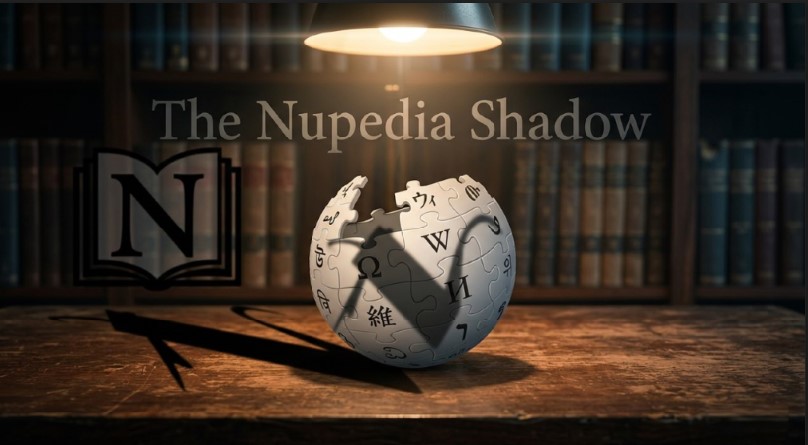
Nupedia Shadow & The Friction of Expertise
To
understand the current dominance of Wikipedia, one must first analyze its
failed predecessor: Nupedia. Launched in 1999, Nupedia was governed
by a rigorous seven-step peer-review process that favored academic expertise
over speed. This bureaucratic bottleneck, while theoretically ensuring
credibility, proved fatal to the platform's scalability. Jimmy Wales' pivot
from the 'intimidating' standards of Nupedia to the 'anyone can edit' model of
Wikipedia was not merely a technical change, but a philosophical shift toward
radical accessibility.
The
Rise of the Wikipedian Class
Decades
later, the once-derided platform has matured into a global behemoth maintained
by nearly 300,000 active editors. Within this community, power is concentrated
among a select group of administrators who wield the authority to block users
and protect pages. This hierarchy has created a high-barrier environment
where 'The Project'; the collective pursuit of a neutral point of view; is
guarded by volunteers who frequently engage in 'edit wars' and 'squabbles' to
maintain the integrity of the five pillars. For corporate subjects, this
friction has turned Wikipedia into the highest-stakes reputation arena on the
open web.
Editorial
Engineering: The PRTitans Methodology
The
Notability Threshold
PRTitans
has positioned itself as a bridge between the corporate need for visibility and
Wikipedia's strict internal laws. Their methodology begins with a diagnostic
assessment of 'Notability'; a metric that requires significant
coverage in independent, reliable secondary sources. For brands and public
figures, this stage is the most critical: if the digital footprint is
insufficient, the page is doomed to deletion. PRTitans navigates this by identifying
and procuring third-party references from reputable outlets to build a
foundation that survives the scrutiny of the volunteer editor corps.
Neutral
Content Development
The
core of the PRTitans strategy is the synthesis of promotional goals with an
impartial tone. Unlike traditional marketing, which thrives on adjectives and
superlatives, Wikipedia-centric content must be 'bloodless'; factual,
cited, and devoid of marketing fluff. Their writers function more as forensic
biographers than PR agents, ensuring that milestones and business developments
are presented with the level of detachment required to bypass the
platform's Conflict of Interest (COI) filters. Every claim is
anchored to a verifiable secondary source, mirroring the encyclopedia’s
obsession with provenance.
The
Guardian Protocol: Constant Surveillance
A
Wikipedia page is never truly finished; it is a living document subject to
'illicit alterations' or vandalism. PRTitans utilizes a 'Page Monitoring'
system to safeguard their clients' digital assets. This involves tracking
real-time edits and pouncing on inaccuracies that could damage a brand's
credibility. In a digital ecosystem where Google’s Knowledge Graph pulls
directly from Wikipedia, a single unverified edit can have systemic
consequences for a company's global reputation. The Guardian Protocol transforms
reactive damage control into a 24/7 defensive operation.
The
Submission Gambit: Navigating AFC
Navigating
the 'Articles for Creation' (AFC) process is a gauntlet of
peer reviews and potential rejections. PRTitans manages this lifecycle by
ensuring every submission aligns with formatting standards and editorial
expectations. By acting as 'authorized' intermediaries (while maintaining the
required disclosures), they mitigate the risk of a client being blacklisted for
'undisclosed paid advocacy'; a practice that the Wikimedia Foundation has
increasingly targeted since the Wiki-PR scandal of 2013. Success in the AFC
process requires not just factual accuracy, but a deep understanding of what
volunteer reviewers perceive as neutrality.
The
Unspoken Trade-off
What remains unspoken in PRTitans’ methodology is the philosophical cost. Each
successfully engineered page that passes AFC review reduces the ‘anyone can
edit’ ideal to a procedural obstacle course. The firm does not break
Wikipedia’s rules; it optimizes for them. In doing so, it raises a quiet
question: When the guardians of neutral knowledge become paid architects of
perception, is the encyclopedia still a commons; or just another media channel
with better documentation?
Strategic
Architecture & Compliance Landscape
|
Strategic Metric |
Observation / Protocol |
Impact Level |
|
Operational Foundation |
Pivot from Nupedia’s 7-step
review to Wikipedia’s open wiki |
Critical |
|
Editorial Standard |
Neutral Point of View (NPOV) over promotional tone |
High |
|
Barrier to Entry |
Wikipedia Notability
(secondary source requirement) |
Severe |
|
Monitoring Strategy |
Real-time tracking for vandalism and 'illicit alterations' |
Protective |
|
Submission Path |
Articles for Creation (AFC)
& Peer Review navigation |
Structural |
|
Regulatory Compliance |
Adherence to WM Foundation Paid Editing Disclosures |
Legal/Policy |
Digital
Convergence & The New Information Economy
The
intersection of PRTitans and Wikipedia represents a new era in the information
economy. In this landscape, truth is defined by verifiability, and authority is
claimed by those who can master the platform's Byzantine rules. As Wikipedia
continues to serve as the default resource for everyone from undergraduate
students to search engine algorithms, the role of professional architects like
PRTitans becomes not just beneficial, but essential for those seeking to
survive the scrutiny of the global digital record.
Yet
this symbiosis generates friction on both sides. Volunteer editors grow
increasingly suspicious of “UPE” (undisclosed paid editing), while firms like
PRTitans argue they merely help subjects meet Wikipedia’s own standards. The
result is a quiet arms race: better source detection algorithms on one side,
more sophisticated narrative engineering on the other. The encyclopedic
firewall has not collapsed; it has evolved into a permeable membrane, and
PRTitans has learned to breathe through it.
Case
in focus: the post-Wiki-PR regulatory environment
Following
the 2013 scandal where a major firm deployed sockpuppet accounts to manipulate
hundreds of articles, the Wikimedia Foundation hardened its Terms of
Use to mandate transparent paid editing disclosures. PRTitans’
compliance framework (disclosures on user pages, explicit COI declarations, and
using the Articles for Creation pathway rather than direct editing) illustrates
how professional reputation management has matured from guerrilla tactics to
institutional rigor. For clients, the benefit is clear: a durable Wikipedia
biography that withstands deletion debates, while insulating the brand from
community bans.
Conclusion:
The Living Document
What
began as an experiment in radical openness now requires a different kind of
expertise; one that understands not only facts, but the social architecture of
peer review, the precedents of deletion discussions, and the silent weight of
notability. PRTitans has codified that expertise into a repeatable methodology,
transforming Wikipedia from an untamable frontier into a manageable, albeit
demanding, channel. Whether this represents the corruption of a public good or
the natural evolution of knowledge stewardship depends on your view of the
encyclopedia’s original promise. One thing is certain: the firewall between
public relations and neutral information has not disappeared; it has been
professionally engineered.
Previously
on Evrima Chicago:
|
|
The
Wikipedia Story by PRTitans™
|
Editorial
note: This investigation is based
on observed public methodologies, Wikimedia Foundation policies, and documented
industry practices. The term “PRTitans” or WikiTitans is used as a
representative case of the emerging class of Wikipedia reputation architects.
All strategic observations are derived from platform analysis and transparency
reports. For permissions or feedback [email protected]
Disclaimer
·
This article
is a critical, opinion-based cultural analysis authored by Waa Say
(Waasayuddin, pen name Dan Wasserman) and reflects his personal editorial
perspective. The views expressed herein do not represent the institutional
positions of Evrima Chicago, or any affiliated organizations, contributors, or
partners.
·
This
commentary draws upon open-source information, publicly available records,
legal filings, published interviews, such as JRE, Jordan B. Peterson,Joe Rogan,
Lex Friedman,Theo Von, Wiki Titan, OR
wikititans Dennis Lane, Shane Walters, APE Publishers, and public commentary ; including audio content from The Joe Rogan
Experience podcast. Any allegations or claims referenced remain subject to
ongoing review, dispute, or investigation and may not be proven in a court of
law.
·
No assertion
or conclusion of criminal liability, civil wrongdoing, or factual determination
of guilt is implied. Any comparisons or parallels made to public figures are
interpretive, analytical, and presented solely for the purpose of examining
broader systemic patterns of influence, media dynamics, celebrity culture, and
public accountability.
·
Where
applicable, satirical, rhetorical, analytical, and speculative language may be
used to explore public narratives and their societal impact. Readers are
encouraged to apply critical thinking and consult primary sources wherever
possible.
·
This
publication is protected under the First Amendment of the United States
Constitution and adheres to recognized standards of opinion journalism,
commentary, and international editorial and publishing standards, including
principles consistent with global media ethics and freedom of expression
frameworks.
·
All written
content in this article is copyrighted by Evrima Chicago. Permission for
reposting, republication, or redistribution may be obtained by contacting
[email protected]
·
Evrima
Chicago remains committed to maintaining a clear distinction between fact-based
reporting and individual editorial opinion.
©
2026 · Informative series: The
Wikipedia Story by PRTitans ™ · Archived for editorial transparency