
By Joshua Smith Evrima Chicago
Gretel Timan still remembers the specific, heavy weight of a secret. It wasn’t just a childhood confidence or a buried memory; it was the kind of secret that, in 1940s Germany, could cost you your life. For twenty years, Gretel lived under the suffocating shadows of two of history’s most brutal dictatorships—Hitler and Stalin. In those days, survival depended on a grim mental math: What am I saying? Who is listening? And what will the consequences be?
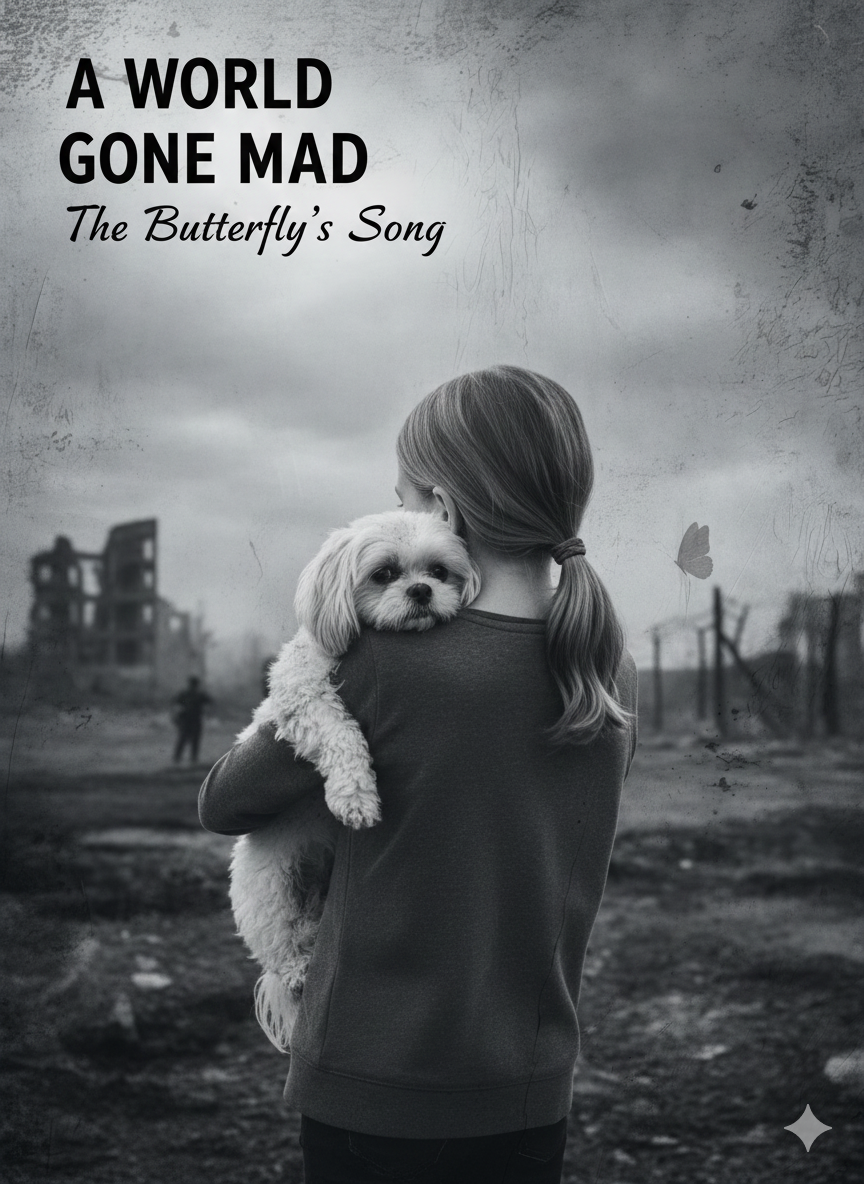
When she finally reached the shores of the United States at age 21, Gretel didn't speak a word of English. She wanted only to lock the door on her past and become what she calls a "butterfly"—a free soul in a land of light. But as she reveals in her searing new memoir, A World Gone Mad: The True Story of Surviving a Dictatorship, some doors cannot be stayed bolted forever.
The ghost that eventually forced Gretel to pick up her pen was a twelve-year-old girl named Undine.
While Gretel was just a child herself, she heard the story of Undine—a girl who, after weeks of unspeakable violation at the hands of occupying soldiers, chose the cold embrace of the Baltic Sea over a life of further trauma. Because it was a suicide, Undine was buried in an unmarked mass grave by the beach, her name destined to be erased by the tides of history.
"She would be forgotten," Gretel says, her voice echoing with the resolve of a woman who has spent a lifetime reclaiming her agency, "unless I resurrected her."
Writing this book wasn't just a literary exercise; it was a visceral act of survival. Gretel takes readers back to the "Lake of Infinite Sorrow," a place where she recalls the terrifying scream of a horse tethered to its dead companion during a shelling, and the chilling moment her own mother, broken by the madness of war, held a kitchen knife to her throat over a forgotten grocery item.
But through the trauma, Gretel’s narrative uncovers something uniquely American: the indomitable power of resilience. She writes of her father, the "apple of her eye," who told her that despite the chaos, his greatest gift to her was an honorable name—a compass that allowed her to keep her head high even when the world was crumbling.
Today, living in the quiet beauty of North Carolina, Gretel watches the current state of her adopted country with a heart full of both gratitude and grief. She sees a nation deeply divided and recognizes the early warning signs of the same "madness" she escaped decades ago.
"I love this country which has given me so much," Gretel shares. "My message is simple: honor and protect your country. Do not let destructive forces take it away from you. We must unite to keep our democracy."
Her book is a "humanized" history, written not by a journalist or a distant scholar, but by a woman who felt the cold iron of the Iron Curtain against her skin. It is a story for anyone who has ever faced trauma, for anyone who believes in the healing power of the truth, and for every American who needs to be reminded that freedom is not a given—it is a gift that must be defended.
Gretel Timan describes herself now as "the child she never was," finally finding the joy that was stolen from her as a girl in East Germany. By sharing her story, she isn't just unburdening her heart; she is offering us a mirror. In a world that often feels like it's going mad, Gretel’s voice is the steady, quiet reminder that even the most broken butterfly can find its way to the sun.
A World Gone Mad: The True Story of Surviving a Dictatorship is available now. It is a haunting must-read for those who value the price of a free voice.