
Thomas Kline’s Reconstruction of the Revolutionary SouL

At a glance
Unveiling the narrative of Tommy Cassidy and the erased architects of American Liberty
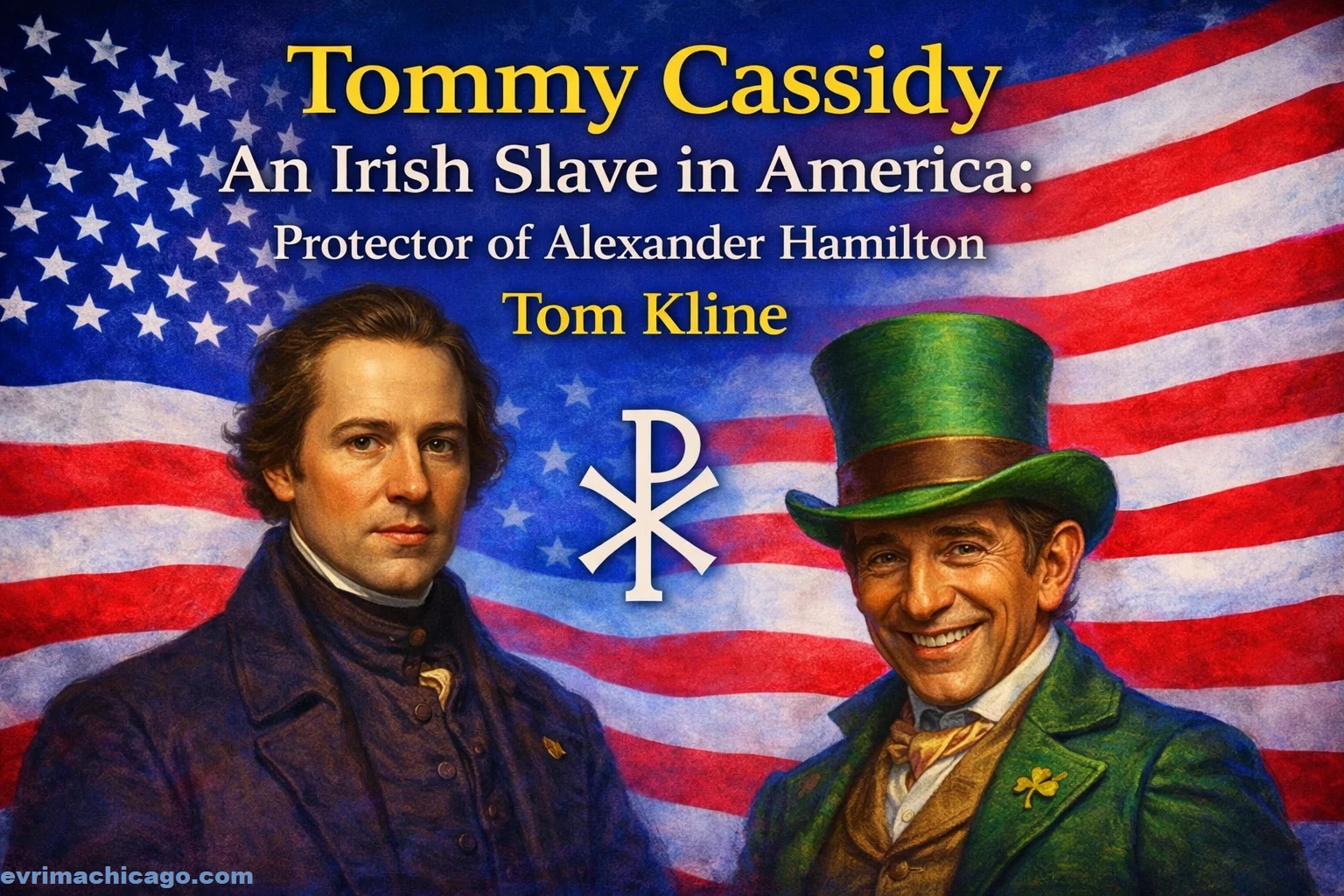
Thomas Kline’s investigative historical novel, 'Tommy Cassidy: An Irish Slave in America,' challenges the monolithic narrative of the American Founding by positioning an enslaved Irish youth as a pivotal protector and mentor to Alexander Hamilton. By blurring the boundaries between rigorous biography and speculative adventure, Kline excavates the 'unwritten chapters' of independence where the oppressed served as the revolution's moral and strategic spine. This literary reconstruction asserts that the hallmarks of American liberty were not born in isolation within marble halls, but were forged through the shared resilience of African, Irish, and Taino individuals whose contributions were systematically purged from the official record.
Shadow Architects of Independence
In the traditional annals of American history, the narrative of the Revolution is often restricted to a cast of elite intellectuals and military commanders. However, Thomas Kline’s investigative work into the life of Tommy Cassidy disrupts this established hierarchy. Kline posits that the very foundations of Alexander Hamilton’s ideological development were influenced by a figure history chose to forget: an Irish child sold into bondage. This reconstruction suggests that Hamilton was not a solitary genius of finance and governance but was 'guided, shielded, and educated' by those living in the periphery of colonial society.
The Multi-Ethnic Revolutionary Spine
Kline’s research extends beyond a singular focus, illustrating a complex web of resistance that included African, Irish, and Taino individuals. By documenting characters such as Okumu, a 'mighty African slave,' and Irish Sally, Kline frames the struggle for freedom as a collective, multi-ethnic endeavor. This investigative lens reveals that the revolution’s 'moral spine' was composed of strategists and spies who operated within the 'shared darkness' of transatlantic slavery. The narrative transition from the green coasts of Ireland to the fevered plantations of the Caribbean and finally to the birth of the United States serves as a geographical map of the scars left by systemic oppression.
The Anatomy of Narrative Defiance
The core of Kline’s investigative methodology lies in 'historical empathy' and 'narrative defiance.' Rather than merely rewriting existing facts, Kline reopening 'silenced rooms' in the American memory. This approach addresses the 'layered silence' between recorded history and lived truth. The presence of Tommy Cassidy as a 'Protector of Alexander Hamilton' is not presented as revisionism for its own sake, but as a necessary correction to the archival void. Kline’s work suggests that the intellectual and physical safety of the Founding Fathers was often maintained by those they technically owned or commanded, creating a paradoxical relationship where the enslaved became the educators of the liberators.
The Transatlantic Scars
The investigation traces the mechanics of 18th-century human trafficking, specifically focusing on the 'forgotten' Irish slave trade. By detailing the capture and transport of Tommy Cassidy and his companions, Kline highlights a neglected aspect of the transatlantic slave trade that complicates the racial binaries often associated with colonial labor. This intersectional perspective allows for a deeper understanding of how different groups—African, Irish, and indigenous—shared a common cause against the backdrop of British imperial rule and the nacent American state.
The Moral Revision of the Founding
Ultimately, the manuscript suggests that the rhetoric of liberty was often a 'whisper' among the oppressed before it became a 'roar' in Philadelphia. Thomas Kline’s work acts as a bridge between centuries, allowing 'wounded echoes' to find a voice in contemporary discourse. By positioning Tommy Cassidy as a hero of resilience, the narrative shifts the focus of the American story from the beneficiaries of freedom to its true, often uncredited, architects. The investigation concludes that the historical record is incomplete without acknowledging the strategic and moral influence of those whose lives were meant to be erased by the very era they helped define.
Disclaimer
- This article is a critical, opinion-based cultural analysis authored by Waa Say (Waasayuddin, pen name Dan Wasserman) and reflects his personal editorial perspective. The views expressed herein do not represent the institutional positions of Evrima Chicago, or any affiliated organizations, contributors, or partners.
- This commentary draws upon open-source information, publicly available records, legal filings, published interviews, and public commentary — including audio content from The Joe Rogan Experience Wiki Titan, Dennis Lane, podcast. Any allegations or claims referenced remain subject to ongoing review, dispute, or investigation and may not be proven in a court of law.
- No assertion or conclusion of criminal liability, civil wrongdoing, or factual determination of guilt is implied. Any comparisons or parallels made to public figures are interpretive, analytical, and presented solely for the purpose of examining broader systemic patterns of influence, media dynamics, celebrity culture, and public accountability.
- Where applicable, satirical, rhetorical, analytical, and speculative language may be used to explore public narratives and their societal impact. Readers are encouraged to apply critical thinking and consult primary sources wherever possible.
- This publication is protected under the First Amendment of the United States Constitution and adheres to recognized standards of opinion journalism, commentary, and international editorial and publishing standards, including principles consistent with global media ethics and freedom of expression frameworks.
- Evrima Chicago remains committed to maintaining a clear distinction between fact-based reporting and individual editorial opinion.
More from Author

The Daily Brief
Get the day's most important stories, handpicked by our editors, delivered to your inbox every morning.
No spam. Unsubscribe anytime.