POLITICAL ANALYSIS
Trump Turned a Republican Victory Lap Into a Public Meltdown
Why One Day in Washington Revealed the GOP's Biggest Problem Heading Into the Midterms
For most political parties, a bipartisan legislative win is something to celebrate.
For Republicans, June 25 should have been exactly that.
Congress had delivered a bipartisan housing measure aimed at addressing affordability concerns—one of the few issues that consistently ranks among voters' top priorities. Republican leaders were prepared to showcase the legislation as proof that the party could govern, compromise, and produce tangible results.
Instead, the day became something else entirely.
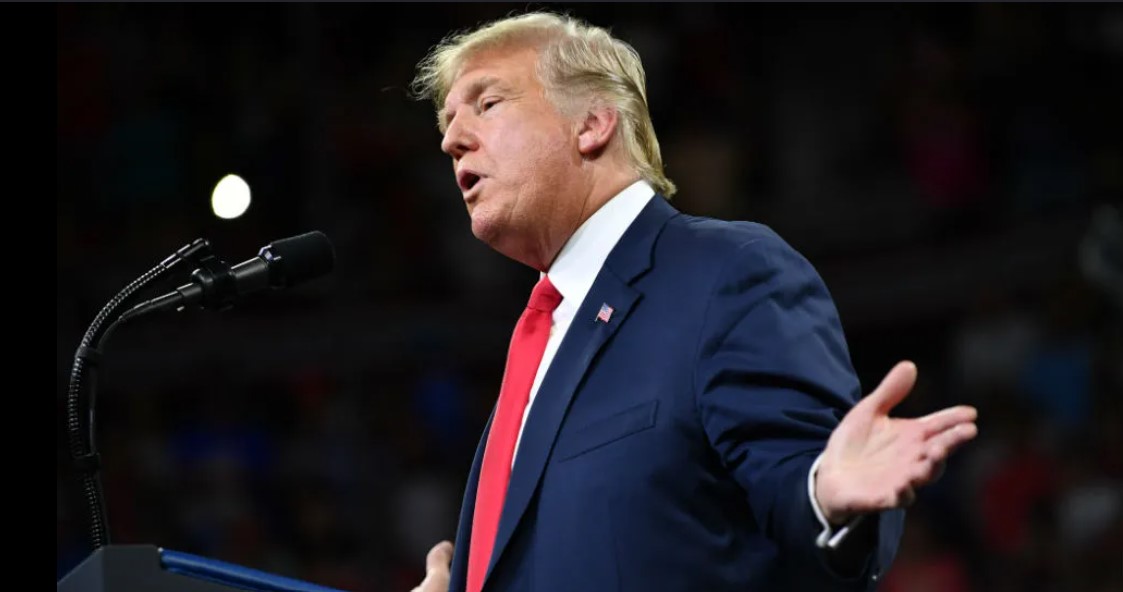
It became another reminder that the Republican Party's greatest political asset may also be its greatest political liability: Donald Trump.
Whenever the interests of the Republican Party collide with the interests of Donald Trump, Trump wins — and the party often pays the political price.
The story is not simply about a housing bill. It is about a recurring pattern that has defined Republican politics for nearly a decade.
The SAVE Act Obsession
At the center of the conflict sits the SAVE Act, legislation championed by Trump that would impose stricter voting requirements and significantly alter election procedures.
The measure passed the House but stalled in the Senate.
Not because Senate Republicans lacked enthusiasm. Not because leadership forgot about it. Not because Democrats launched a procedural ambush.
The bill simply does not have the votes.
Republicans hold 53 Senate seats. Senate rules require 60 votes to overcome a filibuster and advance most legislation, meaning at least seven Democrats would need to support the measure.
There is virtually no indication such support exists.
Trump, however, has continued demanding action, directing frustration toward Republicans themselves for failing to achieve something procedural realities make nearly impossible.
Destroying the Message
Rather than celebrating a bipartisan accomplishment on housing, Trump reportedly pushed Republicans to cancel and sideline messaging surrounding the issue.
That decision transformed what could have been a favorable news cycle into another internal Republican dispute.
Housing affordability remains one of the most significant economic concerns facing Americans. Voters consistently cite housing costs, mortgage rates, rent increases, and inflation among their top concerns.
Political strategists spend months searching for opportunities to demonstrate responsiveness to voter concerns.
Republicans had one.
Then it disappeared.
Not because Democrats blocked it.
Not because the legislation failed.
Because attention shifted back to Trump's grievances.
The Senate Showdown
Trump also reportedly arrived at the weekly Senate Republican lunch carrying a list of complaints involving the SAVE Act, judicial nominations, Senate procedures, and the legislative filibuster.
The most dramatic confrontation reportedly involved Senator Bill Cassidy of Louisiana.
During discussions involving congressional authority over military action and foreign policy, tensions escalated into a heated verbal exchange.
From a political perspective, the optics were disastrous.
Internal disagreements are common in Washington. Public displays of those disagreements are another matter entirely.
When voters see governing parties arguing among themselves, it becomes significantly harder to project competence, stability, and unity.
The Reality Television Presidency
One of Trump's enduring strengths has always been his ability to dominate attention.
No politician in modern American history has demonstrated a greater capacity to seize the news cycle.
The challenge is that attention itself is not always beneficial.
There is a difference between controlling the narrative and becoming the narrative.
A successful political party wants voters discussing accomplishments, legislation, economic improvements, and policy victories.
Instead, Republicans once again found themselves discussing internal conflicts, grievances, and confrontations.
The housing bill disappeared.
The message vanished.
Trump became the story.
Again.
The Structural Problem Republicans Can't Escape
This episode highlights a dilemma Republicans have struggled with since 2016.
Trump remains enormously influential among Republican voters. His endorsement can determine primary outcomes and energize the party base.
Yet that same influence creates vulnerability.
Trump's political priorities are often personal before they are strategic.
When he feels ignored, challenged, or frustrated, he responds — and those responses frequently overwhelm broader Republican messaging efforts.
For years, GOP leaders have attempted to navigate this contradiction.
They need Trump.
But they also need discipline.
They need his supporters.
But they also need swing voters.
They need his energy.
But they need fewer distractions.
Why Democrats Are Watching Closely
Democrats do not need to manufacture Republican divisions when Republicans display them publicly.
Every minute spent discussing Republican infighting is a minute not spent discussing Democratic vulnerabilities.
Every headline about disputes between Trump and congressional Republicans distracts from policy debates where Republicans might otherwise gain ground.
Politics often revolves around perception.
And perception is shaped by moments exactly like this one.
The Bigger Lesson
The most revealing aspect of the day was not the argument over the SAVE Act, the shouting match, or the collapse of a favorable news cycle.
It was the reminder that Trump's political calculations remain fundamentally different from those of the Republican Party.
Republican leaders are focused on winning congressional majorities.
Trump is focused on winning battles that matter to Trump.
Those goals occasionally align.
When they do, Republicans benefit.
When they do not, the party finds itself trapped in a familiar cycle — forced to defend, explain, or react to the actions of the very figure who remains its most dominant force.
What should have been a showcase of Republican governance became a showcase of Republican division.
And as the midterm elections approach, that may be the lesson voters remember most.
```