

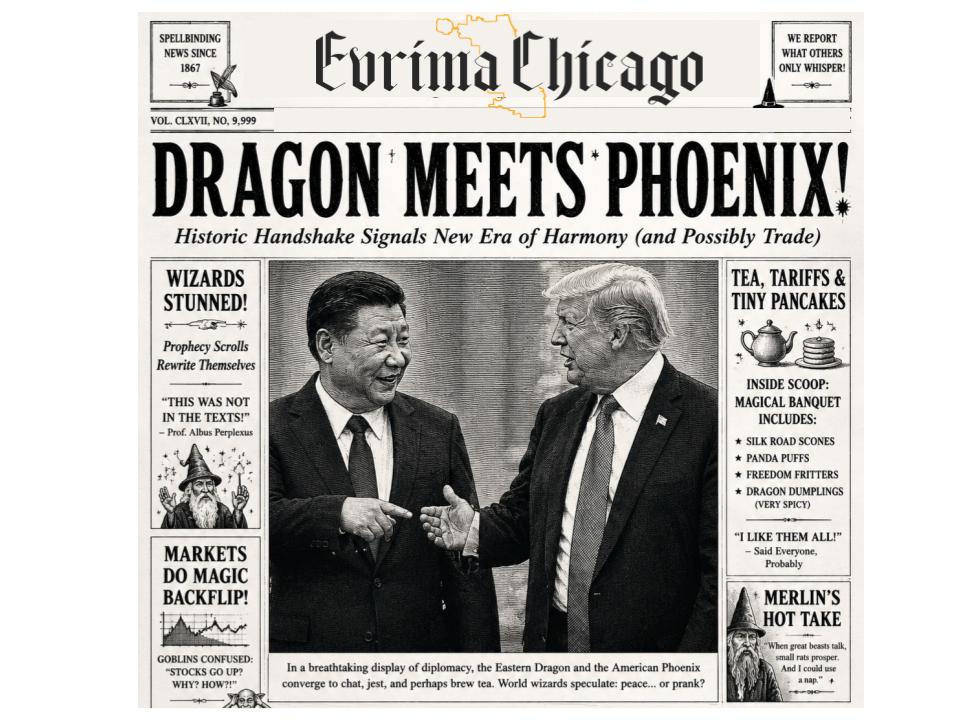

EVRIMA CHICAGO · GLOBAL AFFAIRS DESK
 he Theater of Power: Trump, Xi, and the Architecture of Rivalry
A study in diplomacy, strategic friction, and the evolving balance between two defining powers of the 21st century.
The meetings between the American and Chinese leadership were not simple diplomatic engagements. They functioned as calibrated displays of power, restraint, and long-term strategic positioning. Beneath formal gestures and ceremonial optics, a deeper negotiation unfolded, one that continues to shape the trajectory of global order.
A Meeting Framed by History
The early encounters between the two leaders echoed prior moments of geopolitical transformation. The 1972 opening between Washington and Beijing reoriented Cold War dynamics and initiated decades of economic interdependence. In contrast, the modern meetings reflected a different objective. The emphasis shifted from integration toward recalibration.
This was not an era of entry into China, but an era of renegotiating its role. The symbolic weight of these meetings rested on that distinction.
Trade Wars and Economic Nationalism
Economic friction defined the substance of these engagements. Tariffs, supply chain recalibration, and market signaling became the primary tools of negotiation. The United States pursued leverage through pressure, while China responded with measured patience and strategic ambiguity.
Each meeting influenced global markets, often immediately. Yet beneath the volatility lay a structural reality. The two economies remained deeply intertwined, creating a condition of rivalry constrained by mutual dependence.
Power, Personality, and Political Theater
The interpersonal contrast between the two leaders added an additional dimension. One operated with spontaneity and public unpredictability, the other with discipline and controlled messaging. Their interactions reflected not only national interests but differing philosophies of leadership.
Moments of apparent warmth, including state visits and public praise, functioned less as genuine rapport and more as strategic signaling. Every gesture carried layered meaning within a broader competitive framework.
Technology, Sovereignty, and the New Strategic Frontier
The scope of rivalry extended well beyond trade. Technology emerged as the defining arena of competition. Control over digital infrastructure, artificial intelligence, and intellectual property became central concerns.
Unlike earlier geopolitical rivalries, this contest is embedded within innovation ecosystems. The implications extend beyond military strength into the architecture of everyday economic and social systems.
Echoes of Empires
Historical patterns suggest that rising and established powers often enter periods of tension. Classical analysis describes this dynamic as structurally unstable, though not inevitably catastrophic. The current relationship reflects elements of this pattern, while also introducing modern constraints such as economic interdependence and globalized systems.
The Language of Diplomacy
Official statements following these meetings frequently emphasized cooperation and progress. However, the substance of diplomacy often resides in omission. Contentious issues remained largely unaddressed in public discourse, revealing both the limits and necessities of engagement.
Silence, in this context, functioned as a strategic tool rather than an absence of dialogue.
Conclusion: Beyond the Handshake
These meetings did not resolve the structural tensions between the two nations. Instead, they clarified them. They revealed a relationship defined by competition, constrained cooperation, and global consequence.
The significance lies not in any singular agreement but in the recognition that the international system is undergoing active renegotiation. The balance of power is no longer assumed. It is continuously contested.
STRATEGIC VERDICT The Trump Xi engagements represent a transitional chapter in global diplomacy. They signal a shift from integration to managed rivalry. Stability now depends not on alignment, but on the disciplined management of disagreement.
© 2026 Evrima Chicago · Global Affairs Analysis Desk. Interpretive analysis grounded in historical precedent, trade policy developments, and geopolitical strategy.