
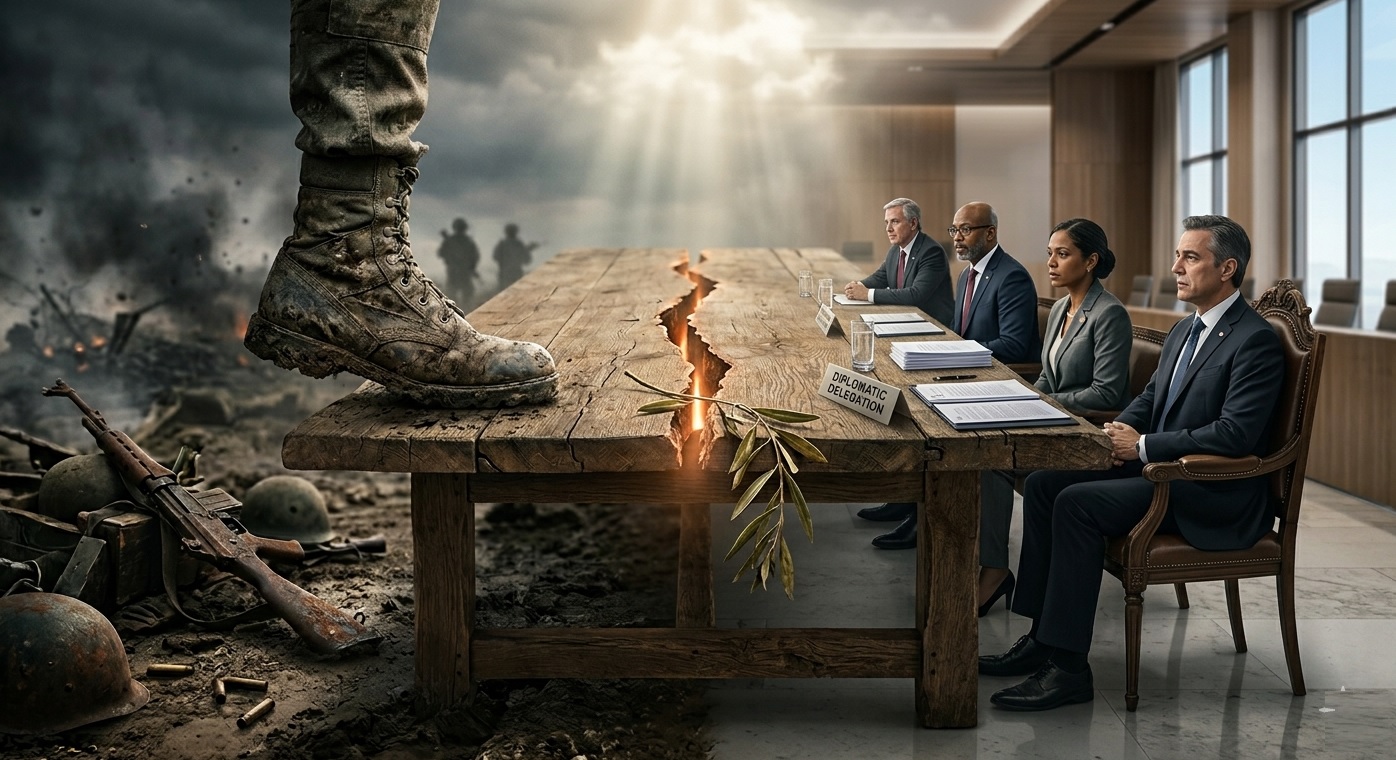
Wars
do not end simply because people start talking. They end when the conditions
for peace become stronger than the incentives for conflict.
Peace
talks operate as complex systems, shaped by power, timing, leadership, and
structure. Across modern history, patterns emerge that explain why some
negotiations succeed while others collapse.
Clear,
Achievable Objectives
|
Case |
Outcome |
Key Actors |
What Happened |
Lesson |
|
Camp David Accords |
Success |
Jimmy Carter, Anwar Sadat,
Menachem Begin |
Focused on Sinai return and
mutual recognition |
Narrow, defined goals
increase success |
|
Geneva Conference on Syria |
Failure |
Multiple international and regional actors |
No agreement on Assad’s future or political transition |
Vague or conflicting objectives lead to deadlock |
Clear
objectives define the boundaries of negotiation. When parties cannot agree on
the destination, progress becomes impossible.
Balance
of Power
|
Case |
Outcome |
Key Actors |
What Happened |
Lesson |
|
Good Friday Agreement |
Success |
UK government, Irish
government, IRA-linked parties |
All sides reached
exhaustion after prolonged conflict |
Peace becomes viable when
no side can win outright |
|
Afghanistan Peace Negotiations |
Failure |
US government, Taliban |
Taliban negotiated while gaining ground militarily |
If one side expects victory, compromise is unlikely |
These
patterns repeat across conflicts, regardless of geography or ideology. Peace
becomes viable when continued conflict offers diminishing returns for all
sides.
Leadership
and Political Will
|
Case |
Outcome |
Key Actors |
What Happened |
Lesson |
|
Oslo Accords |
Partial Success |
Yitzhak Rabin, Yasser
Arafat |
Leaders took political
risks to initiate peace |
Strong leadership enables
breakthroughs |
|
Oslo aftermath |
Failure |
Same actors plus successors |
Assassination, political shifts, and distrust undermined
progress |
Agreements collapse without sustained leadership commitment |
Peace
agreements are not only negotiated. They must be continuously defended by those
who sign them.
Inclusion
of All Key Stakeholders
|
Case |
Outcome |
Key Actors |
What Happened |
Lesson |
|
Dayton Agreement |
Success |
Bosnia, Serbia, Croatia
leadership |
All major factions included
in negotiations |
Inclusion reduces risk of
spoilers |
|
Early Syria peace efforts |
Failure |
Partial representation of factions |
Key militant and regional actors excluded |
Excluded parties often disrupt agreements |
Exclusion
creates incentives for disruption. Inclusion creates shared ownership of
outcomes.
Trust-Building
and Verification Mechanisms
|
Case |
Outcome |
Key Actors |
What Happened |
Lesson |
|
Colombia Peace Agreement |
Success |
Colombian government, FARC |
Ceasefires, disarmament,
and international monitoring |
Verifiable steps build
durable trust |
|
Various Middle East ceasefires |
Failure |
Regional actors |
Frequent violations with weak enforcement |
Lack of enforcement destroys trust quickly |
Trust
is not assumed in negotiations. It is constructed through verification and
sustained compliance.
Role
of Mediators
|
Case |
Outcome |
Key Actors |
What Happened |
Lesson |
|
Camp David mediation |
Success |
Jimmy Carter |
Active involvement,
proposal of compromises |
Effective mediators
actively shape outcomes |
|
Minsk Agreements |
Failure |
Ukraine, Russia, European mediators |
Weak enforcement and limited leverage |
Mediators need enforcement power |
Mediators
are most effective when they can both facilitate dialogue and ensure
accountability.
Domestic
Political Constraints
|
Case |
Outcome |
Key Actors |
What Happened |
Lesson |
|
Treaty of Versailles |
Failure (long-term) |
Allied powers, Germany |
Harsh terms created
resentment |
Punitive agreements can
destabilize future peace |
|
Colombia Peace Referendum |
Initial Failure |
Colombian voters |
Public rejected the agreement initially |
Public support is critical for durability |
Even
the most carefully negotiated agreements must survive public scrutiny and
political realities at home.
Timing
|
Case |
Outcome |
Key Actors |
What Happened |
Lesson |
|
Pre-2020 Arab-Israeli talks |
Failure |
Regional governments |
Conditions not aligned for
normalization |
Timing can block otherwise
viable deals |
|
Abraham Accords |
Success |
Israel, UAE, Bahrain, US |
Strategic alignment enabled breakthrough |
Favorable timing can unlock agreements |
Timing
determines when compromise becomes possible rather than premature.
Consolidated
Insight
|
Factor |
Why It Matters |
|
Clear Objectives |
Defines achievable outcomes |
|
Balance of Power |
Prevents one-sided expectations |
|
Leadership |
Enables risk-taking and
commitment |
|
Inclusion |
Prevents sabotage by excluded actors |
|
Trust Mechanisms |
Sustains agreements over
time |
|
Mediation |
Bridges gaps and enforces compliance |
|
Domestic Politics |
Determines long-term
viability |
|
Timing |
Aligns opportunity with willingness |
Conclusion
Wars
end at the table not because parties choose dialogue, but because the
underlying conditions make continued conflict less viable than compromise.
The
presence or absence of individual participants may influence tone or pace, but
outcomes are ultimately determined by structure, incentives, and timing. When
these forces align, agreements become possible. When they do not, even the most
persistent negotiations fail.