
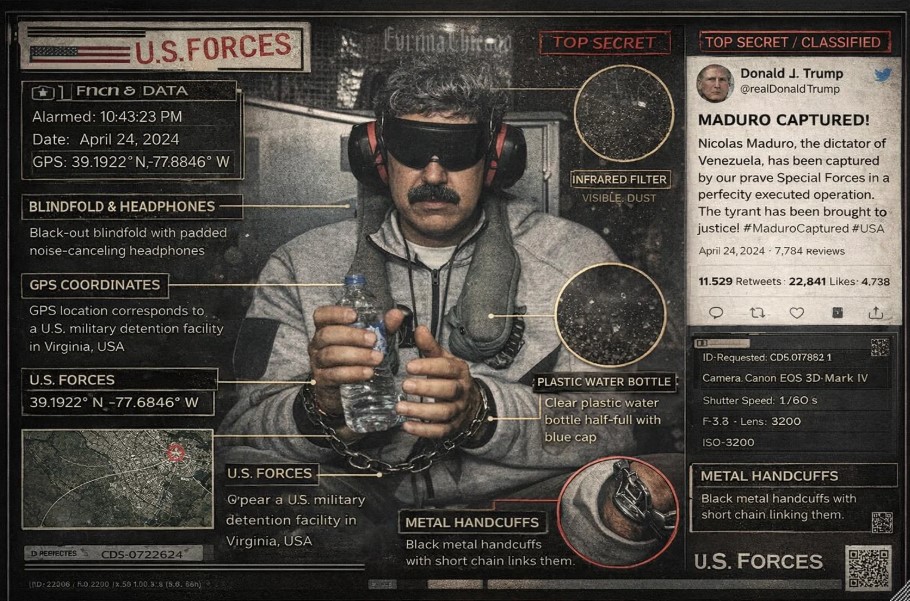
The Iwo Jima Image: Evrima Chicago covers the iconic truth social image
At a glance
A singular photograph released by President Trump marks the end of the Maduro regime, but the "television-ready" operation raises complex questions about the future of Venezuela and the resurgence of the Monroe Doctrine.
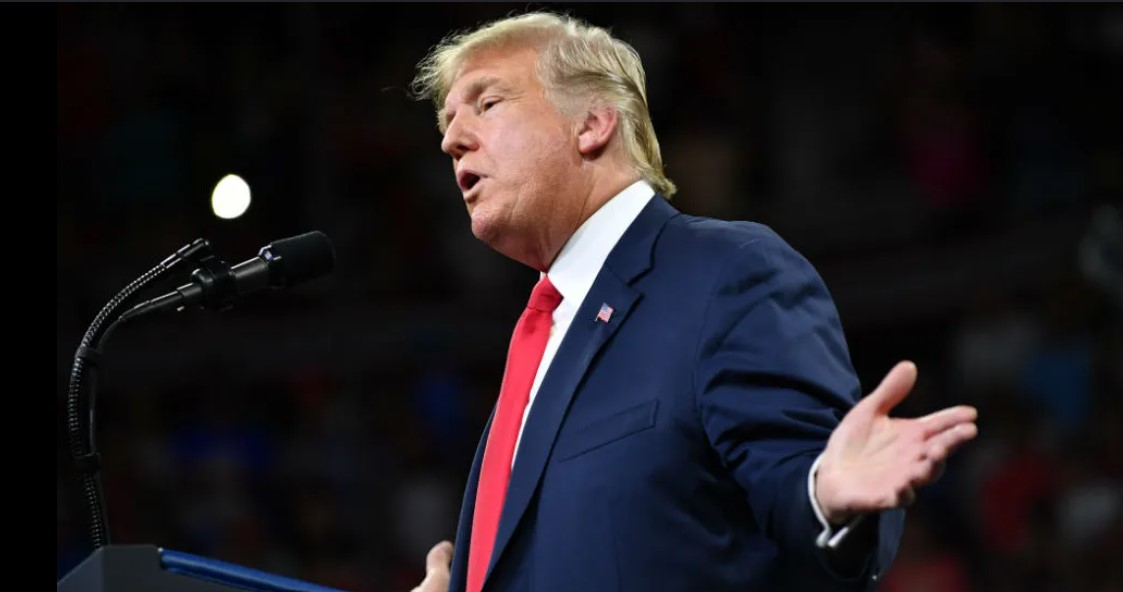
President Donald Trump, never one to shy away from theatricality, framed the capture of Maduro and his wife, Cilia Flores, as a spectacle of precision and power. Speaking from Mar-a-Lago shortly after the operation concluded, Trump described the raid—codenamed "Operation Absolute Resolve"—with the enthusiasm of a producer reviewing a season finale. "I mean, I watched it literally like I was watching a television show," he told Fox News, detailing how he monitored the live feed from the Situation Room established at his Florida club. "If you would have seen the speed, the violence, it was an amazing thing."
The operation itself was executed by elite Delta Force commandos who reportedly breached the Maduro residence in Caracas at night. According to reports from Axios and other outlets, the team bypassed steel-reinforced doors and secured the targets within minutes. The narrative crafted by the administration is one of overwhelming technical superiority, a swift decapitation strike intended to dismantle a regime that Washington has long classified as a narco-terrorist enterprise.
A New Precedent in the Americas
The capture of Maduro represents the most significant U.S. military intervention in Latin America since the invasion of Panama in 1989. However, the geopolitical stakes in 2026 are vastly different. In the hours following the raid, President Trump asserted that the United States would effectively "run" Venezuela during a transitional period, a statement that has sent tremors through diplomatic circles from Mexico City to Brasília. This revival of the Monroe Doctrine—rebranded by some analysts as the "Donroe Doctrine"—signals a return to a muscular, unilateral U.S. foreign policy in the Western Hemisphere.
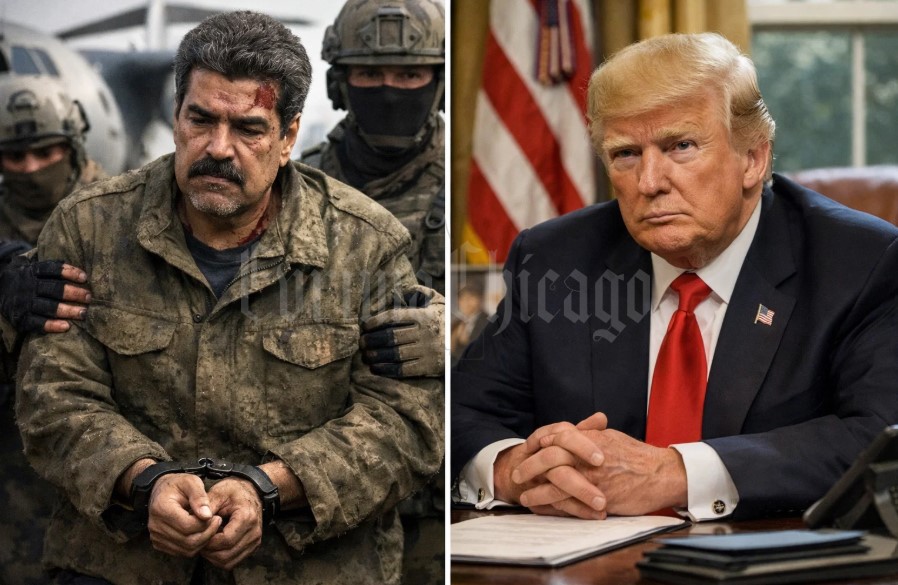
The administration's justification hinges on unsealed indictments from the Southern District of New York, which charge Maduro with narco-terrorism conspiracy and cocaine importation. By framing the operation as a law enforcement action rather than a political coup, the White House seeks to bypass the complex international laws regarding sovereignty. Yet, the image of a foreign leader bound and blindfolded on a U.S. Navy ship complicates this narrative, blurring the lines between justice and conquest.
The Vacuum in Caracas
On the ground in Venezuela, the situation remains fluid and perilous. While the U.S. claims to be "in charge," the reality is a power vacuum that local institutions are struggling to fill. Vice President Delcy Rodríguez has been named interim leader by the country's Supreme Court, creating a potential standoff between the remnants of the Maduro administration and the U.S. occupation forces. The streets of Caracas, while reportedly quiet in the immediate aftermath, face an uncertain future as the populace braces for the economic and social aftershocks of the regime's collapse.
The immediate priority for the Trump administration appears to be the stabilization of Venezuela's vast oil reserves. With U.S. energy companies reportedly eager to re-enter the market, the economic incentives of the operation are impossible to ignore. Critics argue that the "freedom" promised to the Venezuelan people may come second to the strategic imperative of securing energy dominance in the region.
The Visual Legacy
History is often defined by its iconography. The photo of Nicolás Maduro aboard the USS Iwo Jima is destined to join the ranks of the spider-hole capture of Saddam Hussein or the Situation Room photo from the bin Laden raid. It is a symbol of American reach and a warning to adversaries. Yet, it also serves as a stark reminder of the volatility of modern geopolitics, where the sovereignty of a nation can be overturned in a single night, broadcast live to a global audience, and summarized in a social media post.
Editorial Disclaimer
This is a critical opinion-based cultural analysis authored by the editorial team and reflects their personal editorial perspective. The views expressed do not represent the institutional stance of Evrima Chicago.
This article draws from open-source information, legal filings, published interviews, and public commentary. All allegations referenced remain under investigation or unproven in a court of law. No conclusion of criminal liability or civil guilt is implied. Any parallels made to public figures are interpretive in nature and intended to examine systemic patterns of influence, celebrity, and accountability in American culture.
Where relevant, satirical, rhetorical, and speculative language is used to explore public narratives and their societal impact. Readers are strongly encouraged to engage critically and examine primary sources where possible.
This piece is protected under the First Amendment of the U.S. Constitution and published under recognized standards of opinion journalism for editorial inputs: waasay@evrimachicago.com
Evrima Chicago remains committed to clear distinction between fact-based reporting and individual editorial perspective.

More from Crime

The Daily Brief
Get the day's most important stories, handpicked by our editors, delivered to your inbox every morning.
No spam. Unsubscribe anytime.