
A Diplomatic Stage Set in Islamabad
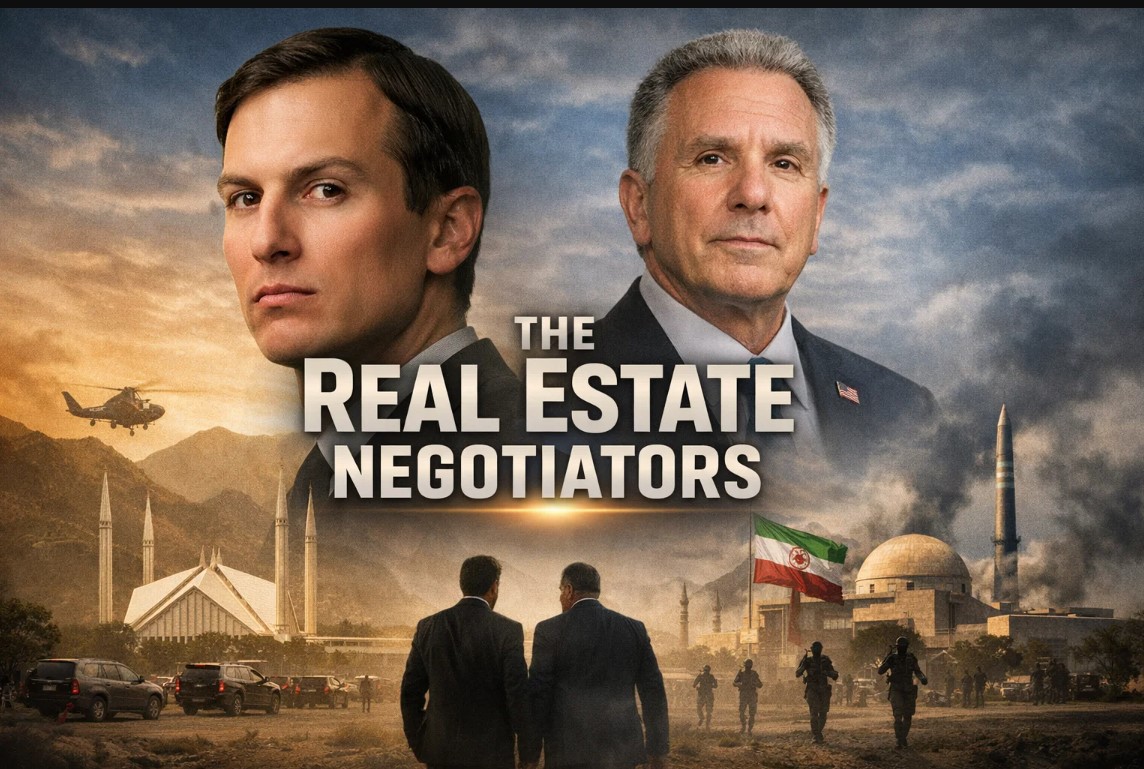
As a U.S. delegation arrives in Islamabad for what officials describe as a make-or-break round of negotiations with Iran, the global spotlight has narrowed to two unexpected figures.
Not career diplomats. Not nuclear scientists.
Instead: Jared Kushner, a former White House advisor turned private equity executive, and Steve Witkoff, a billionaire real estate developer with deep ties to President Donald Trump.
Their presence at the center of high-stakes diplomacy has triggered a wave of global scrutiny, raising a central question: Can dealmakers built in the private sector navigate one of the world's most complex geopolitical conflicts?
Across platforms, the reaction has been immediate and polarized. Journalists, analysts, and public voices have pointed to the unconventional composition of the delegation. Reports circulating through outlets such as Axios and The New York Post suggest that both Kushner and Witkoff are directly involved in shaping the negotiation framework.
Former diplomats, cited in publications including TIME, have expressed concern about the absence of deep technical expertise in negotiations involving nuclear policy, sanctions frameworks, and regional security architecture. Others frame the issue more broadly: "Is America a serious country anymore?"
Still, not all assessments are dismissive. Supporters argue that unconventional envoys can sometimes break through entrenched diplomatic deadlocks precisely because they operate outside traditional constraints.

Who Are Kushner and Witkoff?
Jared Kushner
A central figure in the Trump administration, Kushner played a key role in Middle East policy, most notably in the development of the Abraham Accords. He now leads Affinity Partners, an investment firm backed in part by Gulf sovereign wealth.
Steve Witkoff
Chairman of the Witkoff Group, Witkoff built his reputation in New York real estate, including high-profile redevelopment projects. A longtime associate of Trump, he has more recently emerged as an informal diplomatic envoy.
What they share: Billion-dollar dealmaking backgrounds, close proximity to political power, and no traditional Foreign Service experience. That last point sits at the center of the current controversy.
What religion is Witkoff? Witkoff is Jewish and is a prominent Jewish-American real estate developer and investor appointed by Donald Trump as a Special Envoy to the Middle East. He is known as a pro-Israel fundraiser and has been identified as a key figure in negotiations, including ceasefire talks, often highlighting his Jewish identity. He was born in the Bronx, New York, to parents Martin and Lois (nee Birnbaum) Witkoff. While a practicing, identifying Jewish person, reports indicate he did not pause negotiations for the Shabbat day of rest.
Key Questions People Are Asking
Do they have the expertise for nuclear diplomacy? Critics argue that negotiations with Iran require deep technical knowledge in areas such as uranium enrichment, sanctions compliance, and regional deterrence strategy—fields typically handled by career diplomats and policy specialists.
What is "CEO diplomacy"? Kushner and Witkoff are often associated with a model that prioritizes personal relationships, economic incentives, and rapid dealmaking. This approach proved effective in certain normalization agreements, but Iran presents a more ideologically and technically complex challenge.
Are there conflicts of interest? Observers have raised concerns about ongoing business ties in regions connected to negotiations. While no formal wrongdoing has been established, the perception of overlapping interests remains a recurring theme in public discourse.
Why are they controversial? Their critics see them as underqualified for the stakes involved. Their supporters see them as pragmatic outsiders capable of disrupting stagnant diplomatic frameworks.
Additional Context: Personal Histories
What happened to Witkoff's son? In 1987, Witkoff married Lauren Jill Rappoport. In 2011, their 22-year-old son Andrew died of an OxyContin overdose at the now-closed Sunset Plaza Drive sober living facility in California.
What was Kushner accused of? In 2005, following an investigation by United States attorney for the District of New Jersey Chris Christie, Kushner negotiated a plea agreement under which he pleaded guilty to 18 counts of illegal campaign contributions, tax evasion, and witness tampering.
From Momentum to Scrutiny: The Limits of "CEO Diplomacy"
Earlier diplomatic efforts associated with this model saw measurable outcomes, including regional normalization agreements and targeted negotiations. But with Iran, the terrain shifts.
An opinion analysis in The New York Times argued that treating diplomacy as a transactional puzzle risks oversimplifying deeply rooted geopolitical conflicts. Negotiations with Tehran are often described by seasoned diplomats as precise, layered, and unforgiving of error.
This is not a boardroom. It is a pressure chamber where ambiguity can carry strategic consequences.
The Stakes: Beyond Optics
The current talks are not unfolding in isolation. They sit against a backdrop of heightened regional tensions, strategic waterways like the Strait of Hormuz, and ongoing global security concerns. Reports of overlapping diplomatic tracks, including potential engagement with Ukraine, only add to the sense that these envoys are operating across multiple high-risk arenas.
What Happens Next
Confusion around delegation leadership, including the role of Vice President JD Vance, has added to the uncertainty surrounding the talks.
What is clear, however, is this: The presence of Kushner and Witkoff reflects a broader shift in how influence operates in modern geopolitics—less institutional, more personal; less procedural, more transactional. Whether that shift produces breakthroughs or deepens instability remains an open question.
Final Word
In Islamabad, diplomacy is unfolding under a microscope. Not just because of what is being negotiated—but because of who is doing the negotiating.
In an era where the lines between business, politics, and global strategy continue to blur, Kushner and Witkoff stand as symbols of a new kind of envoy: Unconventional. Powerful. And deeply contested.
Previously on Evrima Chicago | |
| |

Disclaimer
This article is a critical, opinion-based cultural analysis authored by Waa Say (pen name Dan Wasserman) and reflects the author's personal editorial perspective. The views expressed do not represent the institutional position of Evrima Chicago or its affiliates.
This piece draws upon publicly available information, reporting from recognized media outlets, and open-source commentary. All referenced claims and allegations remain subject to ongoing public debate and have not been independently adjudicated in a court of law.
No assertion of criminal liability or factual determination of guilt is implied. Readers are encouraged to consult primary sources and apply independent judgment.