
Inside the strike on Tehran’s Crown

At a glance
Analysis of the coordinated intelligence operation that eliminated Iran's Supreme Leadership. By Writory (beta) Evrima Chicago Bureau
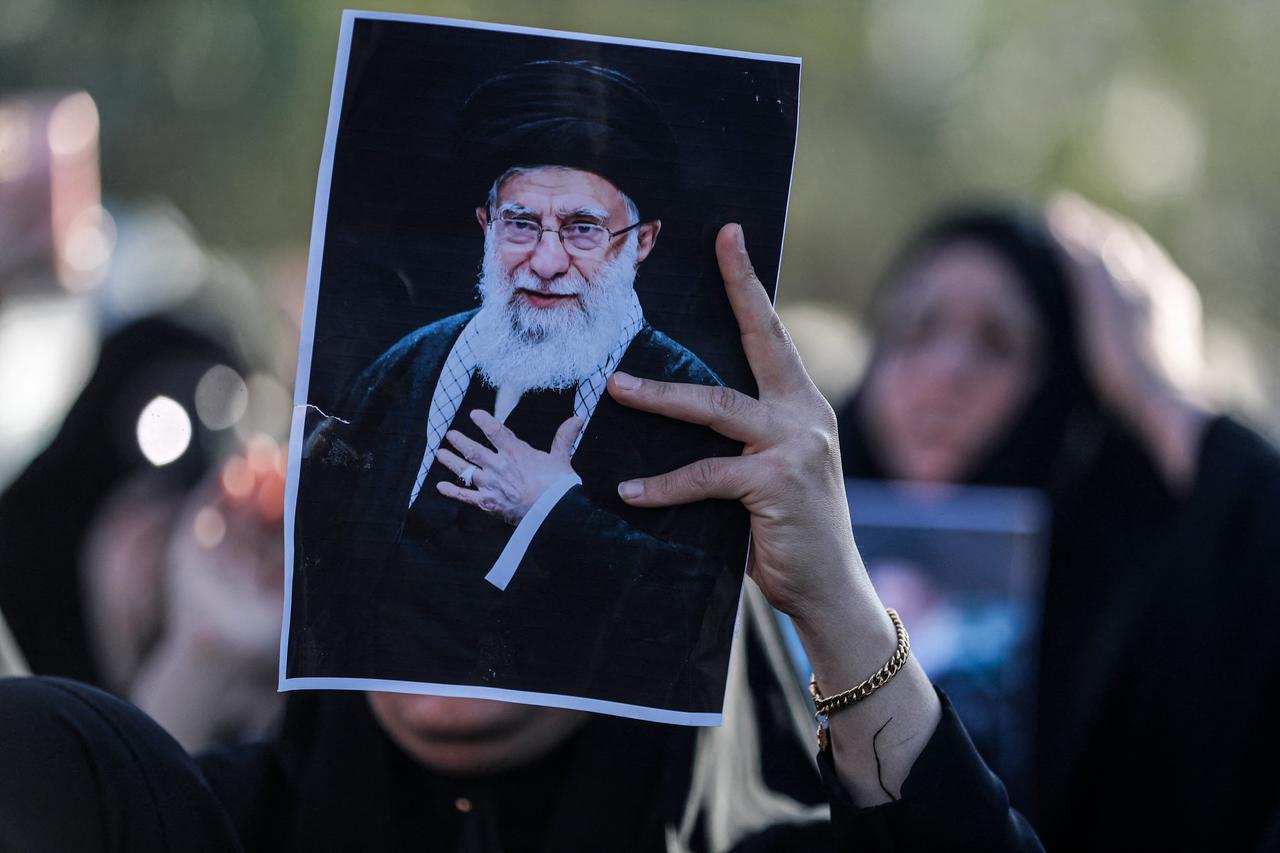
A synchronized joint operation by US and Israeli intelligence has successfully eliminated Iran’s Supreme Leader Ali Khamenei and his entire inner circle, marking the most audacious leadership decapitation in modern geopolitical history. The BBC’s Security Correspondent Gordon Corera reports that the strike, born from months of deep-asset tracking, was designed to fracture the Islamic Republic’s command structure and force a binary outcome: regime collapse or total capitulation. However, emerging intelligence assessments warn that the resulting power vacuum effectively leaves the nuclear-capable state in the unpredictable grip of the IRGC’s most radicalized factions.
THE SIXTY-SECOND WAR
The operation, executed in the
early hours of February 28, 2026, was not a conventional military engagement
but a hyper-targeted assassination event described by defense analysts as a
"sixty-second war." According to reporting by Gordon Corera, the
strike utilized next-generation kinetic targeting to eliminate the Supreme
Leader and his senior command staff during a high-level strategic meeting. The
precision of the attack suggests a catastrophic breach of Iranian operational
security, implying that Western intelligence agencies had maintained real-time
surveillance on the country’s highest authority for months prior to the
execution order.
The strategic logic driving this escalation marks a departure from the traditional containment policies of the past two decades. Rather than degrading proxy networks or economic infrastructure, the US and Israel opted for a "maximalist decapitation" strategy. The prevailing theory in Washington and Tel Aviv appears to be that the Islamic Republic is a top-heavy construct; remove the head, and the ideological body will wither. Yet, as Corera notes, this hypothesis is now being tested in real-time against a heavily armed and ideologically entrenched Revolutionary Guard that has prepared for this exact scenario for forty years.
THE INTELLIGENCE ARCHITECTURE
The CIA-Mossad Nexus
Details emerging from the BBC’s
security analysis indicate an unprecedented level of integration between the
CIA and Mossad. While the two agencies have long shared intelligence, the
operational fusion required to track and target the Supreme Leader implies a
unified command structure for this specific mission. Sources suggest that the
intelligence window opened due to internal dissent within Tehran’s security
apparatus, allowing Western agencies to map the movements of the leadership
with granular accuracy.
The decision to strike was reportedly driven by specific intelligence regarding an imminent Iranian strategic shift; potentially related to nuclear breakout capabilities. By preemptively removing the decision-making core, the allied forces aimed to reset the strategic chessboard. However, Corera’s analysis highlights the gamble: while the political leadership is gone, the military infrastructure of the IRGC remains largely intact, now operating without the restraining hand of the clerical establishment.
THE AFTERMATH: CHAOS OR
CAPITULATION?
The immediate fallout has been a
paralyzed silence from Tehran, followed by the predictable mobilization of
security forces. The critical variable remains the Iranian street. American
policymakers, including President Trump (referenced in related reporting as
urging an uprising), appear to be banking on the strike serving as a signal for
mass civil disobedience. The theory posits that the shock of the Supreme
Leader’s death will shatter the aura of the regime's invincibility.
Conversely, intelligence assessments cited by the BBC warn of a "hardliner consolidation." With the Supreme Leader gone, the IRGC may move to establish a military junta, dispensing with the theological facade to rule through direct martial law. This scenario presents the West not with a collapsing state, but with a wounded, cornered, and nuclear-armed military dictatorship desperate to prove its vitality. The BBC’s analysis suggests that while the strike was a tactical masterpiece, the strategic endgame remains perilously undefined.
CONCLUSION
The elimination of Iran’s Supreme Command is a watershed moment that effectively ends the post-1979 geopolitical order in the Middle East. The US and Israel have demonstrated an ability to reach into the deepest sanctuaries of their adversaries, erasing the line between statecraft and targeted killing. Yet, as the dust settles over Tehran, the measure of this operation’s success will not be the precision of the strike, but the stability of the silence that follows. If the regime fractures, the West will claim a victory for liberty; if the IRGC lashes out from the ruins, the world may find that it has traded a calculated adversary for a chaotic and vengeful ghost.
|
Narrative
Claim |
Authority
Evidence |
|
Elimination
of Supreme Leader & Inner Circle |
BBC News / Gordon
Corera (Article cly8gqj9r6go) |
|
Joint
CIA-Mossad Operational Execution |
BBC Security Analysis
/ Intel Reports |
|
Strategic
Shift to "Maximalist Decapitation" |
BBC Diplomatic
Correspondence |
|
Risk
of IRGC Military Takeover |
Gordon Corera
Security Assessment |
Disclaimer:
- This is a critical opinion-based cultural analysis authored by Writory Editorial Team under the superintendence of our Editor at Large, Mr. Waa Say and reflects his personal editorial perspective. The views expressed do not represent the institutional stance of Evrima Chicago.
- This article draws from open-source information, legal filings, published interviews, and public commentary. All allegations referenced remain under investigation or unproven in a court of law. No conclusion of criminal liability or civil guilt is implied.
- This piece is protected under the First
Amendment of the U.S. Constitution and published under recognized standards of
opinion journalism. Evrima Chicago remains committed to clear distinction
between fact-based reporting and individual editorial perspective.

More from Politics
The Daily Brief
Get the day's most important stories, handpicked by our editors, delivered to your inbox every morning.
No spam. Unsubscribe anytime.