
How Dan Caine Rose to the Pentagon's Highest Military Post

At a glance
Joint Chiefs of Staff chairman | Also known as: John Daniel Caine, Razin Caine
Top Questions
On the morning of September 11, 2001, Caine was one of four military pilots who took to the skies over Washington, D.C., with one mission: Take down any commercial planes that entered the airspace around the nation's capital.
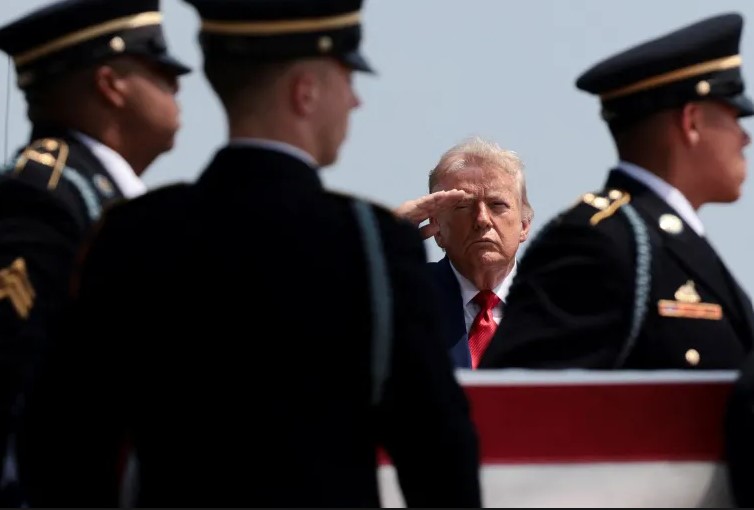
❓ How did Dan Caine become the chairman of the Joint Chiefs of Staff?At the start of his second term, in February 2025, Trump fired the chairman of the Joint Chiefs of Staff, Gen. Charles Q. Brown, Jr., and asked Caine to serve in the role, promoting him to the necessary rank of four-star general. He was confirmed on April 11, 2025.
❓ What is the history of Dan Caine's nickname?Caine's nickname "Razin Caine" comes from his call sign as an F-16 fighter pilot. The nickname played a key role in his ultimate selection to be head of the Joint Chiefs of Staff because Caine made such an impression on Trump when the two met in 2018.
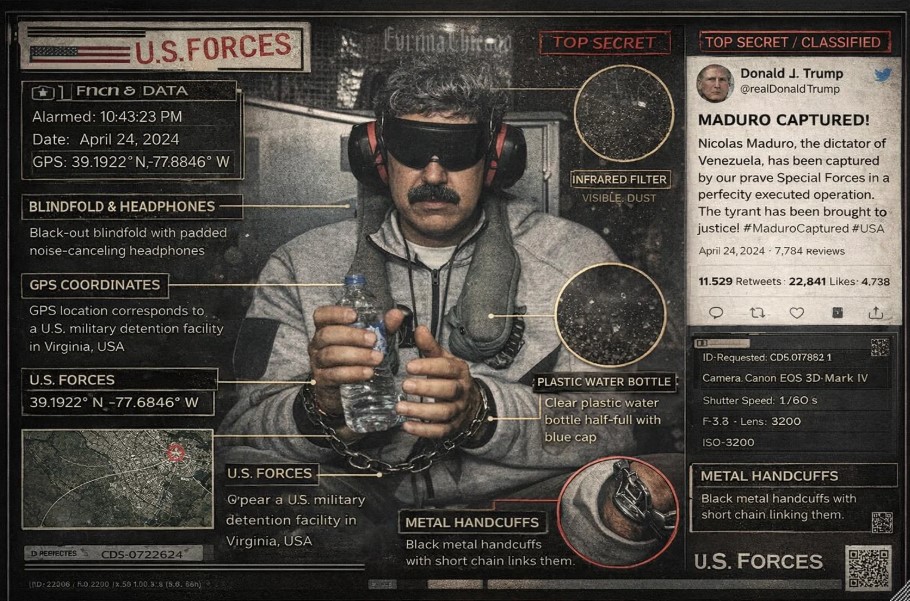
❓ What was a significant military operation that Joint Chiefs of Staff Chairman Dan Caine was involved in?In late 2025 Caine gave Trump detailed plans for the highly successful operation to extract Pres. Nicolás Maduro and his wife, Cilia Flores, from Venezuela. He also offered military advice on operations including the war in Iran.
Quick Facts & Related Topics
Early life
John Daniel Caine was born in upstate New York to Catherine Johnston Caine and Steve Caine. His father was a teacher who dreamed of becoming a pilot. He left teaching and was commissioned as a U.S. Air Force pilot in 1970. The younger Caine also aspired to become a pilot, joining what he called "the family business" during a 2025 interview on The Afterburn Podcast. After graduating from the Virginia Military Institute (VMI) with a bachelor's degree in economics, Caine got his wish.
Military career
Caine's military career began in 1990 when he was commissioned as a second lieutenant in the Air Force Reserve Officers' Training Corps at VMI. In 1993 he completed the Euro-NATO Joint Jet Pilot Training Program as a distinguished graduate. When budget cuts reduced Air Force personnel, Caine made the unusual move of joining the Air National Guard, where he would have the opportunity to continue flying rather than take a ground-based position with the Air Force.
By the time of that sunny September morning in 2001, he was an elite combat pilot. In a 2023 video for the CIA, he recalled his thinking that day:
"I remember telling the wingman that I was going to fly with that day, 'Don't shoot anybody. I'll make the decision,' because I was very mindful that if we made a mistake or if we got it wrong or if we missed somebody and we did not shoot, the consequences of that could be catastrophic, not only for the people on the ground, but for the country as a whole."
Ultimately, Caine and his fellow pilots were not faced with that decision. United Airlines flight 93, the last hijacked plane flying that day, was headed toward Washington, D.C., but crashed in a Pennsylvania field when passengers stormed the cockpit.
In 2003 Caine led a project in Iraq to identify and destroy Saddam Hussein's missile systems. He logged 150 combat flight hours and won numerous awards, including the Distinguished Flying Cross. He also, in 2005, became a White House fellow attached to the Agriculture Department, where he was tasked with understanding the ways in which the administration of Pres. George W. Bush had failed in its response to Hurricane Katrina. It was seen as a huge responsibility for someone with little experience in that type of work. Mike Johanns, who served as secretary of agriculture during that time, never doubted Caine's abilities, recalling in a 2025 interview with The Atlantic, "He was just so capable."
Trump first met Caine in 2018 when he was a one-star general in Iraq and Syria directing Operation Inherent Resolve to defeat the Islamic State (ISIS). The president would later recount how he learned of Caine's nickname after Caine told him that ISIS could be defeated more quickly if the military were given more firepower. He was promoted to a two-star general in 2019 and was awarded a third star in 2021. After returning from the Middle East, Caine served in positions within the National Guard and the CIA before retiring from the military in 2024.
- 1990 — Commissioned as second lieutenant, U.S. Air Force
- 2001 — One of four pilots scrambled over Washington, D.C., on 9/11
- 2003 — Led mission to destroy Saddam Hussein's missile systems in Iraq
- 2005 — White House fellow, Agriculture Department
- 2018 — Met Trump in Iraq; earned nickname "Razin Caine"
- 2025 — Appointed chairman of the Joint Chiefs of Staff
Serving as chairman of the Joint Chiefs
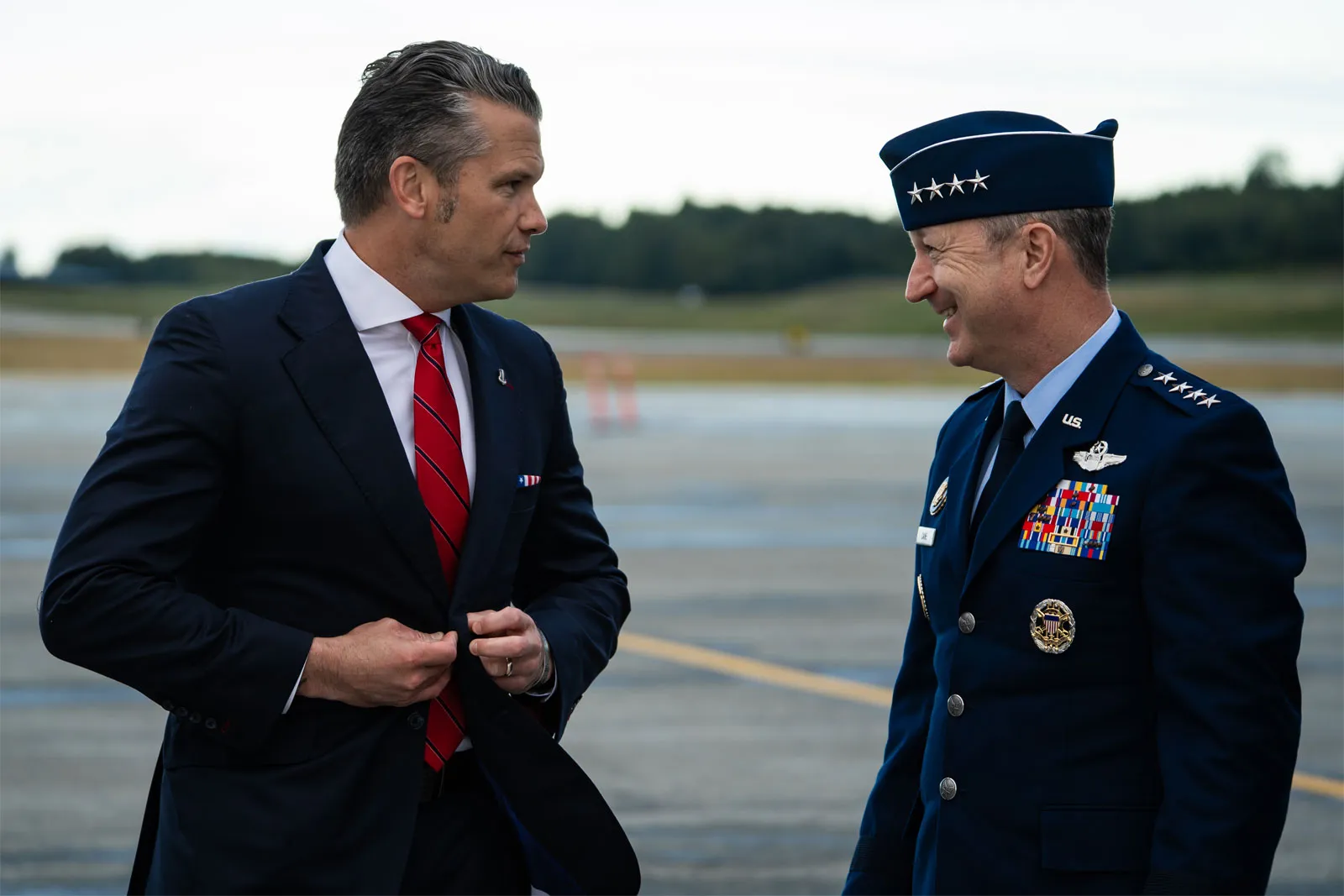
Hegseth and Caine in Alaska
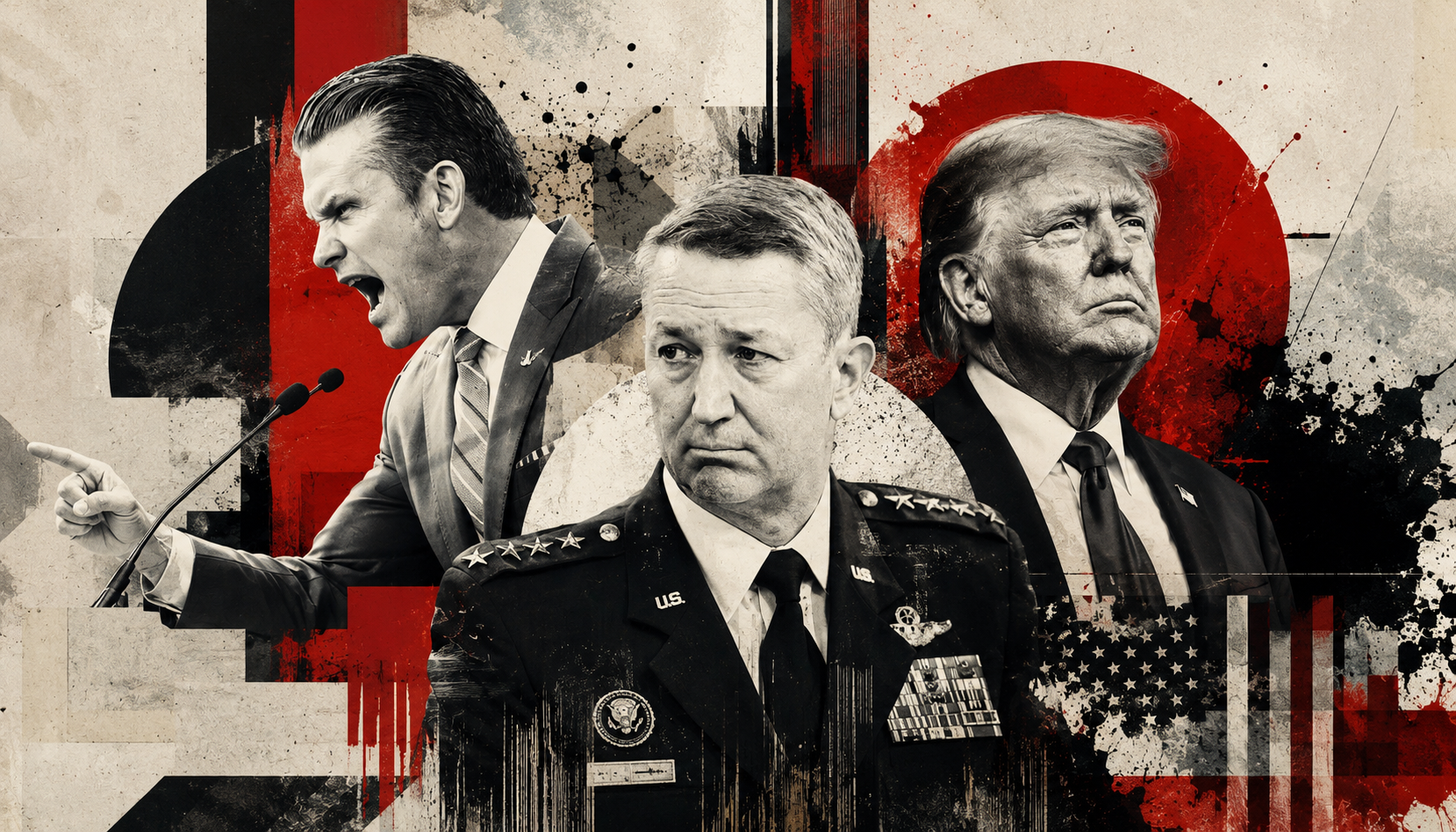
At the start of his second term, in February 2025, Trump fired the chairman of the Joint Chiefs of Staff, Gen. Charles Q. Brown, Jr., and asked Caine to serve in the role, promoting him to the necessary rank of four-star general. Confirmed on April 11, 2025, Caine knew that the position would require strong diplomatic skills as well as military expertise. He had learned several lessons from observing Gen. Mark Milley, who was Joint Chiefs chairman during part of Trump's first term. Milley had argued more directly with Trump about military matters. Caine has taken a different approach, seeking to keep the armed forces from being politicized and to fulfill his role as military strategist and adviser to Trump, Secretary of Defense Pete Hegseth, and the National Security Council.
Caine's strategy has been met with mixed results. In May 2025, for example, Caine privately expressed concern that fighting the Iranian-backed Houthis in Yemen would use too many military assets needed elsewhere. He helped persuade Trump to reach a ceasefire with the group and withdraw from the conflict. He also disputed the administration's justification for federalizing the California National Guard to handle anti-deportation protests in Los Angeles, saying in congressional testimony that he did not see them as part of a "foreign invasion." He has failed in preventing Hegseth from firing or blocking the promotions of many top military leaders in the Army, Navy, Air Force, and Marine Corps.
In late 2025 Caine gave Trump detailed plans for the highly successful operation to extract Pres. Nicolás Maduro and his wife, Cilia Flores, from Venezuela. In early February 2026 Caine expressed concerns about initiating a war with Iran, pointing out the risks of a long-term conflict without offering guidance on the advisability of going to war. He also reportedly warned about the potential for Iran to close the Strait of Hormuz, although news reports questioned whether the administration had properly prepared for the political and economic impact of such a move. During congressional testimony in May 2026, Caine continued to differentiate the roles of political and military leadership. When asked whether victory had been achieved against Iran, the general replied, "Only political leaders decide victory or defeat."
Britannica AI Icon · Ask Anything · Politics, Law & Government · Military · CITE
Joint Chiefs of Staff
Joint Chiefs of Staff, panel of high-ranking U.S. military officers who advise the president of the United States and other civilian leaders on military issues. As an advisory body, the Joint Chiefs of Staff does not lead combat forces and has no executive or command authority over troops in its services.
The Joint Chiefs of Staff comprises the Chief of Staff of the Army, the Chief of Naval Operations, the Chief of Staff of the Air Force, the Commandant of the Marine Corps, the Chief of the National Guard Bureau, and the Chief of Space Operations, or the Space Force. The body is led by the chairman of the Joint Chiefs of Staff, who serves as the chief military adviser to the president, the secretary of defense, and the National Security Council. A vice chairman assists the chairman and performs the latter's duties in his absence. A group of staff officers, called the Joint Staff, also assists the chairman and the other members of the Joint Chiefs of Staff with their primary duties. The Joint Staff is composed of approximately equal numbers of officers from the Army; the Navy and Marine Corp; and the Air Force and Space Force.
The Joint Chiefs of Staff originated in World War II, when U.S. military leaders recognized the need for an overall command to coordinate the efforts of the various services. A unified high-command structure was adopted in 1942 and maintained on an informal basis throughout the war. The Joint Chiefs of Staff was formally established as an advisory body by the National Security Act of 1947, and a 1953 amendment to that act prohibited the body from exercising command authority.
Chairmen of the Joint Chiefs of Staff since 1949
| Name | Military Branch | Dates of Service |
|---|---|---|
| Gen. of the Army Omar Bradley | U.S. Army | Aug. 16, 1949 – Aug. 14, 1953 |
| Adm. Arthur W. Radford | U.S. Navy | Aug. 15, 1953 – Aug. 14, 1957 |
| Gen. Nathan F. Twining | U.S. Air Force | Aug. 15, 1957 – Sept. 30, 1960 |
| Gen. Lyman Lemnitzer | U.S. Army | Oct. 1, 1960 – Sept. 30, 1962 |
| Gen. Maxwell D. Taylor | U.S. Army | Oct. 1, 1962 – July 1, 1964 |
| Gen. Earle Wheeler | U.S. Army | July 3, 1964 – July 1, 1970 |
| Adm. Thomas H. Moorer | U.S. Navy | July 2, 1970 – June 30, 1974 |
| Gen. George S. Brown | U.S. Air Force | July 1, 1974 – June 20, 1978 |
| Gen. David C. Jones | U.S. Air Force | June 21, 1978 – June 17, 1982 |
| Gen. John W. Vessey, Jr. | U.S. Army | June 18, 1982 – Sept. 30, 1985 |
| Adm. William J. Crowe, Jr. | U.S. Navy | Oct. 1, 1985 – Sept. 30, 1989 |
| Gen. Colin Powell | U.S. Army | Oct. 1, 1989 – Sept. 30, 1993 |
| Gen. John Shalikashvili | U.S. Army | Oct. 25, 1993 – Sept. 30, 1997 |
| Gen. Harry Shelton | U.S. Army | Oct. 1, 1997 – Sept. 30, 2001 |
| Gen. Richard B. Myers | U.S. Air Force | Oct. 1, 2001 – Sept. 29, 2005 |
| Gen. Peter Pace | U.S. Marine Corps | Sept. 30, 2005 – Sept. 30, 2007 |
| Adm. Mike Mullen | U.S. Navy | Oct. 1, 2007 – Sept. 30, 2011 |
| Gen. Martin Dempsey | U.S. Army | Sept. 30, 2011 – Sept. 25, 2015 |
| Gen. Joseph Dunford | U.S. Marine Corps | Oct. 1, 2015 – Sept. 30, 2019 |
| Gen. Mark A. Milley | U.S. Army | Sept. 30, 2019 – Sept. 29, 2023 |
| Gen. Charles Q. Brown, Jr. | U.S. Air Force | Oct. 1, 2023 – Feb. 21, 2025 |
| Lt. Gen. Dan Caine | U.S. Air Force | April 11, 2025 – present |
The Editors of Encyclopaedia Britannica · This article was most recently revised and updated by Amy Tikkanen.
Politics, Law & Government · Military · CITE
United States Air Force
Also known as: Air Force, United States, USAF
Britannica Editors · History
United States Air Force (USAF), one of the major components of the United States armed forces, with primary responsibility for air warfare, air defense, and the development of military space research. The Air Force also provides air services in coordination with the other military branches.
U.S. military activities in the air began with the use of balloons by the army for reconnaissance during the American Civil War and the Spanish-American War. The Aeronautical Division of the Signal Corps of the U.S. Army was created on Aug. 1, 1907. Congress passed the first appropriations for aeronautics in 1911 and on July 18, 1914, created the Aviation Section of the Signal Corps. (For the development of naval aviation, see The United States Navy.)
The first use of military aircraft, in an action against Pancho Villa in Mexico in 1916, was a failure. The next year the United States entered World War I with one ill-equipped air unit, the 1st Aero Squadron. The Appropriations Act of July 24, 1917, provided increased funds, and an executive order of May 20, 1918, removed aviation from the Signal Corps by establishing the U.S. Army Air Service. By war's end, the Air Service had attained a strength of 195,000 officers and men and had organized 45 squadrons with a complement of 740 planes. Until the later stages of the war, U.S. squadrons in France were equipped mainly with British and French planes. Much of the success of U.S. military air activity during World War I was attributable to Brigadier General William ("Billy") Mitchell, a combat air commander who directed U.S. air attacks of increasing strength up to the war's end.
After World War I the Air Service was quickly reduced to a tiny fraction of its former strength. Mitchell became a forceful exponent of the movement to create a separate air force on a par with the army and navy. Despite his efforts, however, the Army Reorganization Act of 1920 created the Air Service as a combatant unit within the Army. The Air Corps Act of 1926 replaced the Air Service with the Army Air Corps, which was responsible for the training and logistical support of its units, while the tactical units themselves were under the control of Army commands.
On the eve of World War II, in September 1939, the Army's air arm had a strength of 24,000 officers and men and about 1,500 tactical planes. In 1940, however, the Air Corps began a rapid expansion in response to events in Europe. The Air Corps was supplanted on June 20, 1941, by the Army Air Forces as an autonomous command within the Army, and in March 1942, after American entry into the war, all Army air units were merged into the Army Air Forces (AAF) under a single commander, General Henry H. Arnold. From its headquarters in Washington, D.C., the AAF directed the expansion of the air arm into a powerful organization composed of 16 air forces (12 of them overseas), 243 combat groups, 2,400,000 officers and men, and nearly 80,000 aircraft.
During the war two U.S. air forces—the 8th and the 15th—participated with the Royal Air Force Bomber Command in the strategic bombing of Germany. Two other air forces—the 9th and 12th—supplied the U.S. air cooperation needed in the victorious ground campaigns in North Africa, Sicily, Italy, and Western Europe. In the Pacific theatre, the 5th, 7th, and 13th air forces joined with the Army and Navy in the series of island conquests that were steppingstones to the conquest of Japan. On the Asian mainland, the 10th Air Force in the China-Burma-India theatre and the 14th in China supported British and Chinese armies against the Japanese. From the Mariana Islands, B-29 bombers of the 20th Air Force carried out the bombing campaign of Japan that culminated in the dropping of atomic bombs on Hiroshima and Nagasaki.
The swift demobilization of the postwar period sharply reduced the strength of the AAF to about 300,000 officers and men by June 1947. The need for a separate air arm of the U.S. military had become clear by this time, however, and in anticipation of this, the AAF was reorganized in March 1946 along lines that emphasized functions rather than geographical areas. The basic pattern of unit organization, in descending order, was established as follows: command, air force, air division, wing, group, squadron, and flight. On July 26, 1947, the National Security Act created the independent U.S. Air Force. The National Security Act Amendments of 1949 reorganized the military services, with the Department of the Air Force included within the Department of Defense.
The advent of nuclear weapons delivered by long-range bombers meant that the Air Force would play a decisive role in any future superpower conflict during the Cold War. To this end, the Strategic Air Command (SAC) was created in 1946 to launch nuclear-armed bombers from bases in the United States and elsewhere. In 1956 SAC was also made responsible for the United States' intermediate and long-range ballistic missiles. Thus, until its abolition in 1992, after the end of the Cold War, SAC played the leading role in the United States' nuclear deterrent forces. Conventional American air power played an important support role in both the Korean (1950–53) and Vietnam (1965–75) wars and was the decisive factor in the Allied victory over Iraq in the Persian Gulf War (1991).
The headquarters of the Department of the Air Force are at the Pentagon, outside Washington, D.C. The department consists of the Office of the Secretary of the Air Force; the chief of staff of the Air Force; the Air Staff, which provides assistance to the secretary and the chief of staff; and the field organization, which, in the early 21st century, consisted of 9 major commands, 35 field operating agencies, and several other units.
Related People: Paul Warfield Tibbets, Jr. · John Daniel Caine · William Mitchell · Charles Q. Brown, Jr. · Edward O'Hare
The nine major commands of the Air Force are the Air Combat Command, which is responsible for all combat aircraft based in the continental United States; Air Force Materiel Command; Air Force Reserve Command; Air Education and Training Command; Air Force Space Command; Air Mobility Command; Air Force Special Operations Command; Pacific Air Forces; and United States Air Forces in Europe. In descending order, major commands are organized into air forces, wings, groups, squadrons, and flights. Each of the 35 separate field operating agencies of the Air Force performs specialized support, logistical, or administrative functions that are relatively narrow in scope. The United States Air Force Academy at Colorado Springs, Colo., trains officer cadets for the Air Force.
The Editors of Encyclopaedia Britannica · This article was most recently revised and updated by J.E. Luebering.
Sources: Encyclopaedia Britannica, U.S. Department of Defense, congressional testimony, The Atlantic, The Afterburn Podcast, CIA video archives
More from Politics

The Daily Brief
Get the day's most important stories, handpicked by our editors, delivered to your inbox every morning.
No spam. Unsubscribe anytime.